Compact dodder
Cuscuta compacta
Description
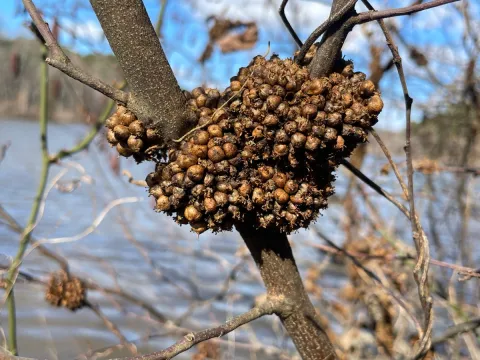
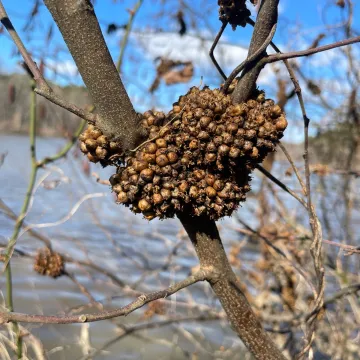
Compact dodder (Cuscuta compacta) is a parasitic plant species belonging to the Convolvulaceae family. As a holoparasite, it lacks chlorophyll and functional roots, relying entirely on the host plant for water, minerals, and carbon compounds. It attaches itself to the host through specialized structures known as haustoria, which penetrate the stem tissue to access the vascular system.
The native range of this species is centered in North America, particularly within the eastern and central regions of the United States. It typically thrives in moist environments, including forested areas, wetlands, and thickets, where it parasitizes various shrubby and woody plant species. In an agricultural context, it acts as a significant pest that can impact crop health and yield.
Botanically, Cuscuta compacta is recognized by its thick, fleshy stems that form dense, compact mats over the host plant. The flowers are small, sessile, and arranged in dense clusters, which distinguishes it from other species in the genus. The seeds are highly resilient and capable of remaining dormant in the soil for several years, ensuring the survival of the population even in the absence of suitable hosts for one or more seasons.
Regarding agricultural requirements, it is strictly considered a noxious weed rather than a crop. It demands high humidity and a reliable host to thrive. Management strategies focus on sanitation and prevention:
- Screening seeds for contamination to prevent introduction.
- Destroying infested host plants immediately upon detection.
- Implementing strict quarantine protocols for imported materials.
- Careful monitoring of field margins and wooded buffers.
There are no beneficial хозяйственные uses for this organism in commercial agriculture, as it poses a direct threat to the vitality of host crops. Due to its status as a total parasite, it does not suffer from typical plant diseases, though it can be susceptible to hyper-parasitic fungi under specific environmental conditions. Control is primarily focused on manual eradication and the application of pre-emergence herbicides to prevent seed germination in sensitive areas.
Photo gallery