Monogynous dodder
Cuscuta monogyna
Description
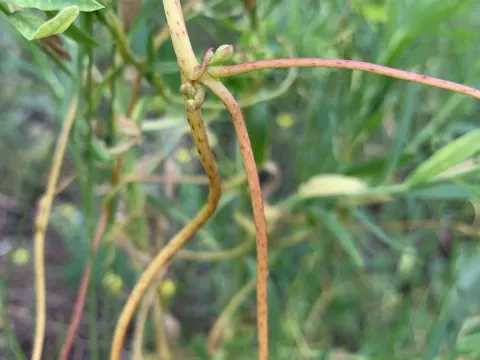
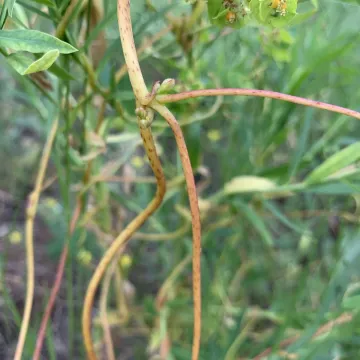
The monogynous dodder (Cuscuta monogyna) is a highly specialized parasitic plant belonging to the Convolvulaceae family. It lacks true roots and leaves, appearing as a tangle of leafless, stem-like filaments that contain little to no chlorophyll. It survives exclusively by extracting water, nutrients, and photosynthates from its host plants.
The species is primarily found in regions spanning Eurasia and the Caucasus. It typically infests woody shrubs, trees, and tall herbaceous vegetation. Its aggressive growth pattern allows it to envelop entire plants, effectively strangling them and creating large areas of stunted vegetation within orchard or forest ecosystems.
Botanically, it is distinguished by its relatively thick, rope-like stems and distinct flowers featuring a single style, which is characteristic of this species. Its seeds are highly resilient, capable of surviving for several years in the soil or within contaminated crop seeds, which makes containment a significant challenge for local farmers.
Agricultural management is difficult due to the plant's parasitic mode of survival. Effective control strategies involve:
- Strict phytosanitary inspection of imported agricultural products.
- Manual removal and destruction of infested plant tissue by burning.
- Deep tillage practices to bury seeds below the germination zone.
- Strategic application of selective herbicides in early growth stages.
From an agricultural standpoint, the monogynous dodder is considered a serious quarantine threat rather than a crop. It causes massive yield losses, weakens host plant vigor, and facilitates the transmission of viral diseases between plants. Its presence often necessitates long-term land fallowing and strict regulatory oversight to prevent its spread to neighboring fields.
Photo gallery