Palestine dodder
Cuscuta palaestina
Description
Palestine dodder (Latin: Cuscuta palaestina) is an obligate parasitic plant belonging to the Convolvulaceae family. Unlike standard agricultural crops, it is a harmful quarantine weed that lacks chlorophyll and a functional root system. Instead, it relies entirely on its host plants, using specialized organs called haustoria to extract water and essential nutrients directly from the host's vascular tissues.
The species originates from the Mediterranean region and the Middle East, particularly thriving in arid and semi-arid climates. While not cultivated, it is a significant focus of study in agronomy because of its potential to invade and devastate agricultural landscapes. Its ability to tolerate harsh environments allows it to persist in regions where other weeds might fail, making it a persistent challenge for local farming systems.
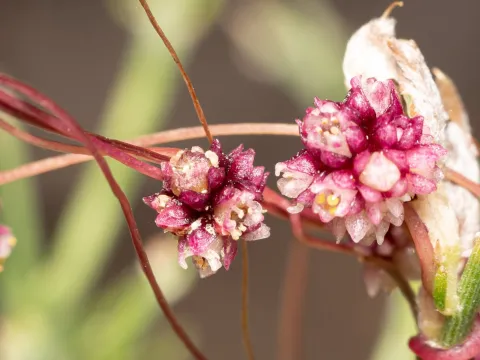
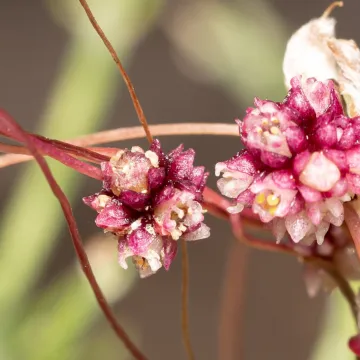
Botanically, the plant is characterized by slender, yellow or reddish thread-like stems that twine around the host. These stems lack leaves and are entirely dependent on the host for survival. After flowering, the plant produces large quantities of seeds that can remain dormant in the soil for several years, ensuring that future generations can emerge once conditions are favorable for infestation.
There are no agricultural requirements for cultivating this species, as it is strictly managed as a pest. Agricultural strategies focus on containment and eradication rather than growth. Key management techniques include the use of weed-free certified seeds, strict quarantine procedures for imports, deep plowing to bury seeds, and the application of targeted herbicides where infestations have been detected.
The economic impact of the Palestine dodder is purely detrimental. It causes severe stunted growth, lower crop yields, and, in severe cases, the complete death of the host plant. Additionally, it acts as a vector for various viral diseases, which can spread rapidly through its haustoria, endangering adjacent healthy crops and leading to widespread economic loss in agricultural fields.
- Highly efficient nutrient extraction through haustoria.
- Broad-spectrum host range including various crops.
- Long-term seed viability in soil.
- Effective transmission of systemic viral diseases.
Photo gallery