Cyanella hyacinthoides
Cyanella hyacinthoides
Description
Cyanella hyacinthoides is a fascinating bulbous perennial belonging to the Tecophilaeaceae family. Recognized for its unique appearance, this plant is a staple for enthusiasts of South African flora who appreciate xerophytic and bulbous species that offer seasonal interest in the garden landscape.
The origin of this species is traced back to the Western Cape of South Africa. It thrives in regions characterized by Mediterranean-like climates, experiencing winter rainfall and hot, dry summers. This climatic pattern dictates the plant’s entire biological life cycle, ensuring it remains dormant during the most stressful environmental conditions.
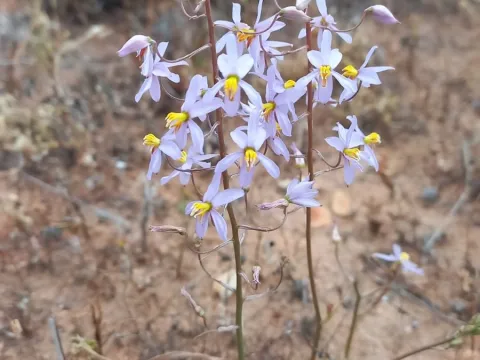
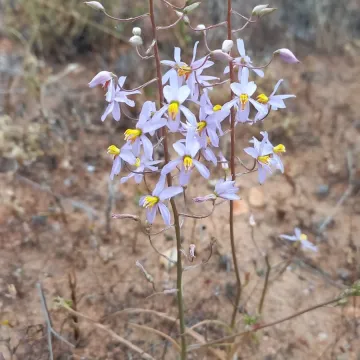
Botanically, the plant is defined by its subterranean corm which stores energy for the growing season. The foliage is relatively modest, consisting of basal leaves, while the inflorescence is the highlight, producing elegant, star-shaped flowers. The coloration often varies between light blue, violet, and white shades, adding a delicate texture to the garden border.
Cultivation requires strict attention to soil structure; it must be exceptionally well-draining to prevent bulb rot. Sandy or gritty soil mixes are ideal for mimicry of its natural habitat. During the active growing phase, regular but careful watering is necessary, while the dormant period requires the plant to stay completely dry to avoid fungal diseases.
Regarding health management, typical threats include bulb-feeding pests and common pathogens such as grey mold (Botrytis), which flourishes if humidity is too high. Maintaining good air circulation is the best preventative measure.
- Planting depth should be roughly 5–10 cm.
- Full sun exposure is vital for maximum floral output.
- Fertilization should be applied only during the active growth phase.
- Pots should be kept in a frost-free area if grown in temperate zones.
Photo gallery