Lingulate knapweed
Cyanus lingulatus
Description
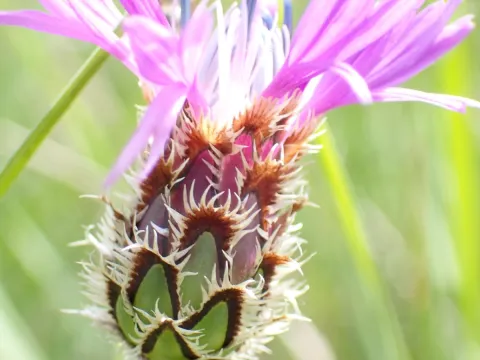
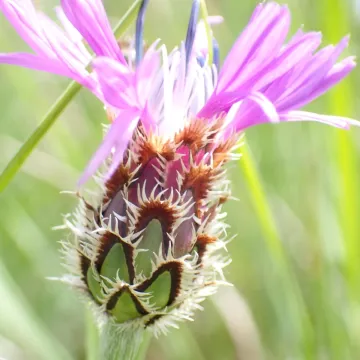
Lingulate knapweed (Cyanus lingulatus) is a herbaceous perennial plant belonging to the Asteraceae family. While not a primary food crop, it serves as an important agricultural component, functioning as a beneficial plant that supports local ecosystems and provides significant value to apiaries situated near farmland.
The species originates from the regions of Western Asia and the Caucasus. It is naturally adapted to rugged, sunny environments and mountainous terrains, which dictates its high resilience to water scarcity and temperature fluctuations, making it a robust addition to low-input agricultural systems.
Botanically, Cyanus lingulatus is defined by its slender, erect stems and distinctively shaped, tongue-like marginal florets found in its composite flower heads. The leaves are typically narrow and lanceolate. It possesses a deep taproot system, which helps it stabilize in the soil and extract nutrients from deeper horizons.
In terms of agricultural requirements, the crop thrives in well-drained, neutral or slightly alkaline soils with full sun exposure. It is highly intolerant of waterlogged conditions. Proper agrotechnology involves spacing that allows for adequate airflow, which is critical for preventing moisture-related pathologies.
The crop is mainly utilized for biodiversity enhancement and as a nectar source for pollinators. Primary threats to health include powdery mildew, especially in humid seasons, and common pests such as aphids. Growers are advised to implement integrated pest management strategies to maintain the health of these plants without disrupting the local pollinator population.
Photo gallery