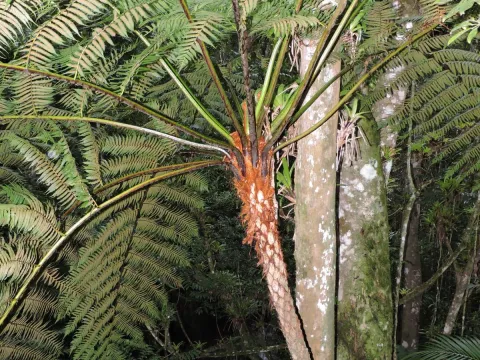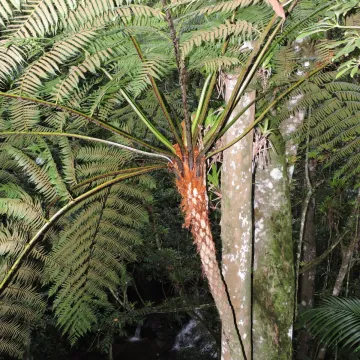
Cyathea delgadii
Cyathea delgadii
Description
Cyathea delgadii is a remarkable species of tree fern belonging to the Cyatheaceae family. This plant is distinguished by its ability to form an upright, woody trunk, which acts as a support for a massive crown of fronds. It is highly regarded in horticulture for its sculptural form and prehistoric appearance, making it a prized specimen for specialized growers.
The native range of this species covers the tropical regions of South America, specifically in Brazil. It thrives in high-humidity habitats such as mountain forests and sheltered valleys. In these regions, Cyathea delgadii benefits from frequent cloud cover and consistent moisture, which keeps the ambient humidity at levels conducive to the growth of tropical epiphytes and ferns.
Botanically, the plant is characterized by a fibrous trunk made of root masses and leaf bases. The fronds are large, bipinnate, and possess a delicate texture, often appearing as a lush canopy. The root system is relatively shallow, which necessitates a growing medium that is both moisture-retentive and well-draining to prevent root asphyxiation.
Successful cultivation of Cyathea delgadii requires meticulous attention to environmental parameters. It demands a temperature range of 18°C to 25°C and high atmospheric humidity. The substrate must be slightly acidic, rich in peat or organic mulch, and kept constantly moist. Proper air circulation is also critical to prevent the proliferation of fungal pathogens on the fronds.
- Light: Bright, indirect light; sensitive to harsh afternoon sun.
- Watering: Consistent moisture, ensuring no dry periods; use mineral-free water.
- Soil: Loose, well-draining mix containing leaf mold and perlite.
- Pests: Watch for spider mites and scale insects in low-humidity environments.
- Care: Periodic misting and cleaning of leaves to maintain health.
Economically, Cyathea delgadii is primarily utilized in the ornamental horticulture sector. It serves as a flagship plant for public botanical gardens, large-scale conservatory projects, and luxury indoor landscaping. Due to its specific climate requirements and slow growth rate, it remains a specialty plant, representing a niche segment of the global exotic ornamental plant trade.
Photo gallery