Giant sumpweed
Cyclachaena xanthiifolia
Description
Giant sumpweed (Cyclachaena xanthiifolia), also known as ragweed sumpweed, is a problematic annual herbaceous plant belonging to the Asteraceae family. While it is native to North America, it has spread across the globe and is widely regarded as an invasive weed rather than a crop, posing a significant threat to modern agricultural productivity.
The origin of this species lies in the central plains of North America. Over time, it has expanded its range into Europe and parts of Asia, effectively colonizing agricultural fields, roadsides, and waste areas. Its success in these regions is attributed to its high adaptability to diverse climatic conditions and its ability to outcompete native and crop vegetation.
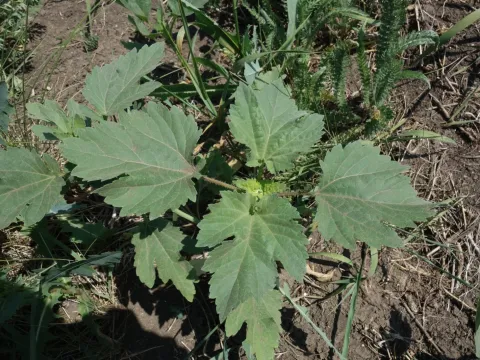
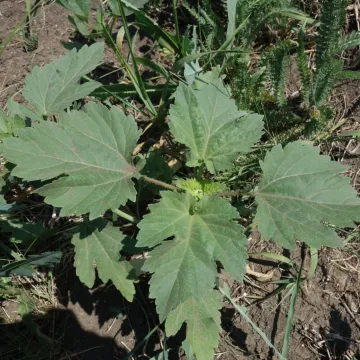
Botanically, this plant is characterized by its massive stature, often reaching heights of 2 to 3 meters. The leaves are large, opposite, and roughly triangular, resembling those of the genus Xanthium. The plant develops a robust, deep taproot system, which allows it to thrive in various soil types, ranging from sandy loams to heavy clays, provided there is adequate moisture during the germination phase.
Giant sumpweed is highly opportunistic, demanding little in terms of soil fertility but thriving in disturbed sites. Agricultural management requires a rigorous approach: deep plowing, pre-emergent herbicide application, and diligent crop rotation are essential. Because the seeds can remain viable in the soil for multiple seasons, management programs must be sustained over several years to deplete the seed bank.
The plant has no commercial agricultural value and is generally managed as a noxious pest. Its primary impact is the significant reduction of crop yields, particularly in row crops like corn and sunflowers, due to its competition for water and solar radiation. Furthermore, it is a significant producer of airborne pollen, acting as a major allergen for agricultural workers and local communities during its flowering season.
- Exceptional growth rate in favorable conditions
- Massive seed production capacity
- Resilience against many standard cultivation practices
- Major cause of seasonal respiratory allergies
Photo gallery