Cyclocarpa stellaris
Cyclocarpa stellaris
Description
Cyclocarpa stellaris is an annual herbaceous plant belonging to the Fabaceae family. As a member of the legume family, this species is noted for its ecological flexibility and its role in maintaining soil fertility within specific tropical agricultural landscapes, particularly in regions where moisture levels are high.
The origin and natural range of this plant are concentrated in the tropical and subtropical zones of Asia. It is frequently observed in wetland habitats, riparian zones, and waterlogged fields, such as those used for paddy rice cultivation. Its ability to thrive in saturated conditions distinguishes it from many other leguminous crops that typically require well-drained soils.
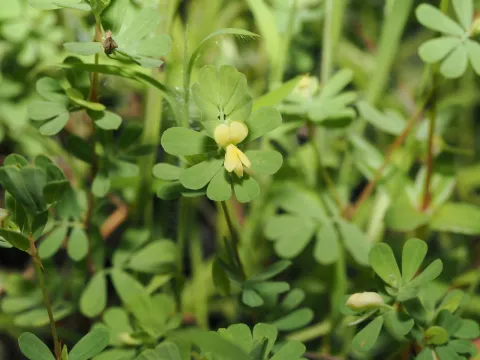
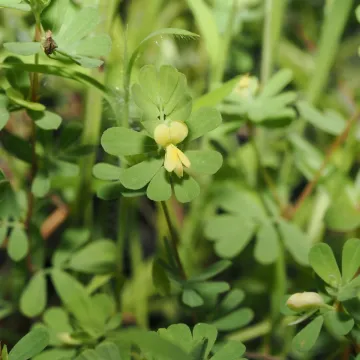
Botanical characteristics of the species include a fibrous root system that actively hosts nitrogen-fixing bacteria. The plant produces slender, branching stems and characteristic compound leaves. Its seed pods are segmented and adapted for dispersal in aquatic environments, which contributes to the plant’s persistence in seasonal floodplains and low-lying agricultural areas.
Regarding climate and soil requirements, Cyclocarpa stellaris is highly adapted to humid conditions. It prefers silt-heavy or clayey soils that retain moisture throughout the growing season. Agricultural management is generally minimal, as the plant acts as a resilient colonizer; however, in a farming context, it is best utilized when integrated into rotation cycles to improve nitrogen content through natural decomposition of biomass.
Economic and agricultural utility is primarily focused on its use as green manure. By enriching the soil with organic matter and fixed atmospheric nitrogen, it serves as a natural fertilizer. While it may serve as an occasional forage source in its native range, its main value remains in sustainable crop production systems, providing an eco-friendly alternative to synthetic nitrogen fertilizers.
- Adaptation to waterlogged soils
- Nitrogen-fixing capabilities
- Annual growth cycle
- Role in sustainable tropical agriculture
Photo gallery