Slender celery
Cyclospermum leptophyllum (Pers.) Sprague ex Britton & P. Wilson
Description
Slender celery (Cyclospermum leptophyllum) is an annual herbaceous plant belonging to the Apiaceae family. In agronomy, it is recognized for its potential as an essential oil crop and its utility in specialized agricultural systems where its rapid life cycle can be utilized for soil cover or secondary chemical production.
The species originated in the tropical and subtropical regions of the Americas but has since naturalized in various climates globally. As an agricultural crop, it thrives in environments that provide a balance between warmth and moisture, requiring well-drained soil profiles to support its delicate root system throughout the growing season.
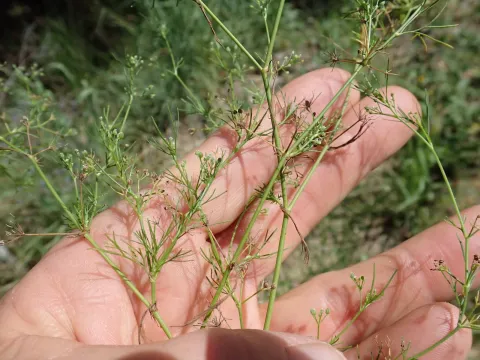
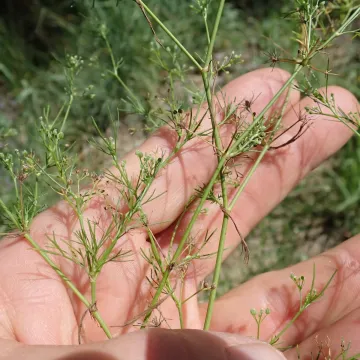
The botanical structure consists of finely divided leaves that resemble those of common celery or parsley. The plant produces small, inconspicuous flowers organized into umbels. Its morphology is adapted for rapid biomass accumulation, which makes it an interesting candidate for short-rotation harvesting practices under optimized irrigation schedules.
Cultivation requirements focus on maintaining high soil fertility and optimal light exposure. Sandy loam soils are generally preferred, as they prevent the waterlogging that often leads to root rot in this species. While it is adaptable to various conditions, consistent thermal inputs within the 18–25 degrees Celsius range are ideal for promoting vegetative vigor.
The primary agricultural and industrial applications include:
- Extraction of aromatic compounds for the cosmetic and perfume industries.
- Use as a medicinal botanical source due to its phytochemical profile.
- Utilization in cover cropping programs in specific climatic zones.
Effective pest and disease management is critical, with special attention paid to preventing outbreaks of aphids and spider mites. Furthermore, susceptibility to fungal diseases such as Septoria leaf spot necessitates a robust prophylactic program, including crop rotation and the careful management of micro-climate conditions within the field to ensure productivity.
Photo gallery