Kenilworth ivy
Cymbalaria aequitriloba
Description
Kenilworth ivy (Cymbalaria aequitriloba) is a perennial herbaceous plant belonging to the Plantaginaceae family. While often confused with its larger relative Cymbalaria muralis, this specific species is prized for its significantly smaller habit and tight growth, making it an ideal candidate for rock gardens and crevices where a delicate, carpet-like appearance is desired.
Native to the Mediterranean region, particularly the islands of Corsica, Sardinia, and the Balearics, this plant has evolved to survive in challenging environments. Its natural habitat includes damp rock faces and stony crevices, which dictates its preference for sites that offer consistent moisture combined with excellent drainage, preventing the roots from suffocating in stagnant water.
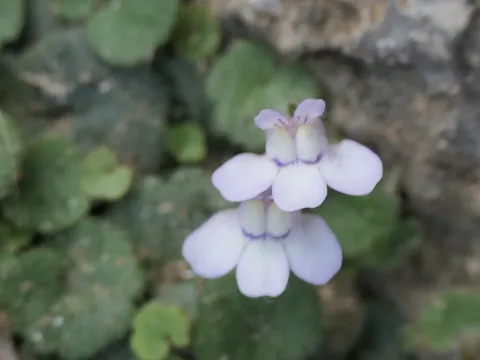
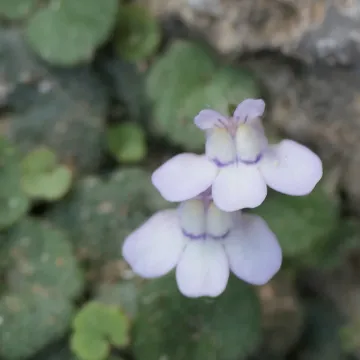
The botanical structure of the plant consists of thin, creeping stems that root easily at the nodes. The leaves are small, rounded, and lobed, creating a dense green mat that persists throughout the growing season. The flowers are typically lilac-purple with a distinctive yellow blotch in the throat, providing a subtle but charming display that draws attention to the plant's delicate architecture.
Cultivation requirements involve selecting a site in partial shade with cool, moist soil. The plant thrives in environments that mimic its natural mountain slope habitat. In home garden settings, it is essential to ensure that the soil is not overly rich in fertilizers, as excessive nutrition can lead to weak, leggy growth. Light soil amendments with gravel or grit are beneficial to mimic the natural rocky conditions.
The practical applications of Cymbalaria aequitriloba in landscaping are focused on decorative usage:
- Carpeting uneven surfaces in rock gardens;
- Filling gaps between paving stones on garden paths;
- Trailing over the edges of stone walls or containers;
- Acting as a filler in terrariums or humid greenhouse environments.
Regarding health and protection, this species is relatively robust but sensitive to extreme waterlogging, which can cause crown or root rot. The primary pests affecting the plant are slugs and snails, which find the soft, succulent foliage highly palatable. Maintaining clean, weed-free surroundings and ensuring adequate airflow are the best preventative measures against these common garden challenges.
Photo gallery