Ivy-leaved toadflax
Cymbalaria muralis P. Gaertn. et al.
Description
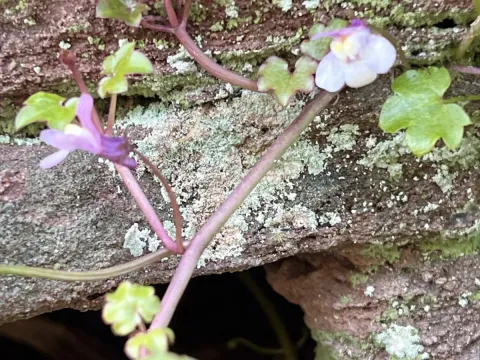
Ivy-leaved toadflax (Cymbalaria muralis) is a herbaceous perennial plant belonging to the Plantaginaceae family. It is widely recognized in the horticultural world as an excellent trailing plant or groundcover, valued for its ability to colonize vertical stone surfaces and damp crevices.
The plant originates from the Mediterranean region and has since spread throughout much of Europe and beyond, naturalizing in various climates. Its evolutionary adaptation to rocky habitats has made it exceptionally resilient to challenging environmental conditions, often thriving where other plants struggle to establish roots.
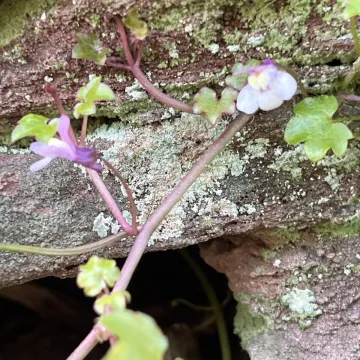
Botanically, this species is characterized by slender, creeping stems that can grow up to 60 cm in length. It produces small, kidney-shaped leaves and delicate, snapdragon-like flowers that are typically lilac-colored with a distinct yellow throat. The plant is known for its phototropic behavior, where flower stalks turn towards the light before seeding, helping the plant wedge seeds into crevices.
Cultivation of Cymbalaria muralis requires careful site selection, preferably in partial shade with consistent moisture. While the plant is quite adaptable, it thrives best in well-drained, alkaline, or neutral soils rich in organic matter. Maintenance is minimal, involving occasional watering during drought and pruning if the plant spreads beyond its intended area, as it is a vigorous grower.
In terms of agricultural and landscape usage, the ivy-leaved toadflax serves several key purposes:
- Decorating stone walls, bridges, and rock garden features.
- Filling gaps in paved walkways and garden steps.
- Providing an aesthetic cascading effect in hanging baskets and window boxes.
- Acting as a dense ground cover for shaded, low-maintenance areas.
The plant is generally robust and free from significant pests and diseases. Occasionally, in stagnant or overly damp environments, it may be susceptible to root rot. Gardeners should monitor for common slugs and snails, which may graze on the foliage, but otherwise, the species remains a very reliable and low-input botanical choice for various garden settings.
Photo gallery