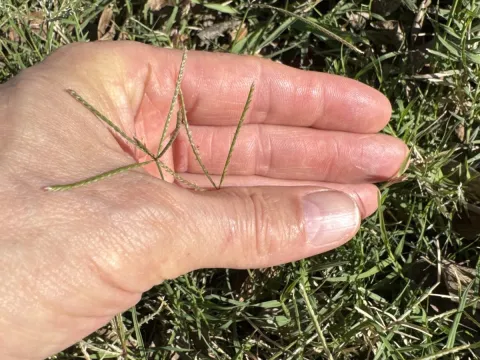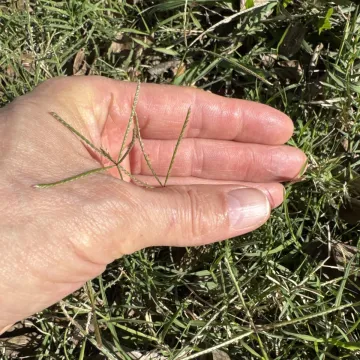
Spiked Bermuda grass
Cynodon mucronatus
Description
Spiked Bermuda grass (Cynodon mucronatus) is a perennial grass species belonging to the Poaceae family. Known for its resilience and vigor, this crop is a key component of pasture systems in tropical and subtropical regions where heat tolerance and persistence under grazing are critical.
The plant originates from warm-climate regions and is widely distributed across various tropical ecosystems. It has adapted to thrive in diverse soil types, demonstrating a particular affinity for well-drained, sunny locations where it can successfully compete with other vegetation due to its aggressive growth habit.
Botanically, it is distinguished by a strong network of rhizomes and stolons that facilitate rapid horizontal spread. The leaves are typically narrow and sharp-pointed, which serves as a protective mechanism. The root system is deep, allowing the plant to access moisture in deeper soil horizons during dry spells.
Agricultural management requires careful seedbed preparation and adequate nitrogen fertilization to maximize biomass production. It is a highly productive crop when managed under an intensive rotational grazing system, which prevents overgrazing and promotes the healthy development of its dense turf structure.
Economic and agricultural uses include:
- Primary forage source for livestock grazing systems.
- Production of high-quality hay when harvested at the peak of vegetative growth.
- Soil stabilization and erosion control on vulnerable slopes.
- Use in commercial landscaping for high-traffic turf areas.
Common issues affecting this crop include fungal infections such as rust and leaf spots, which can be mitigated through proper water management and balanced fertilization. Pests like cutworms and armyworms can also pose risks; therefore, integrated pest management (IPM) strategies are recommended to maintain healthy pasture stands.
Photo gallery