Western hound's tongue
Cynoglossum grande
Description
Western hound's tongue (Cynoglossum grande) is a perennial herbaceous plant belonging to the Boraginaceae family. Unlike many of its weedy relatives, this species is noted for its attractive floral display and specific ecological niche, making it a subject of interest for native plant enthusiasts and botanists alike.
The plant is native to the western regions of North America, specifically California and surrounding areas. It thrives in temperate forest environments, typically found in shaded canyons, under oak canopies, or on moist slopes. Its native habitat provides the cool, damp conditions necessary for its successful early spring blooming cycle.
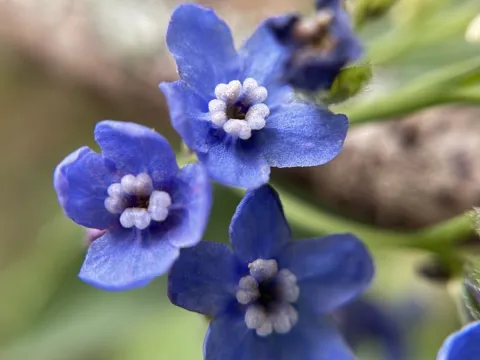
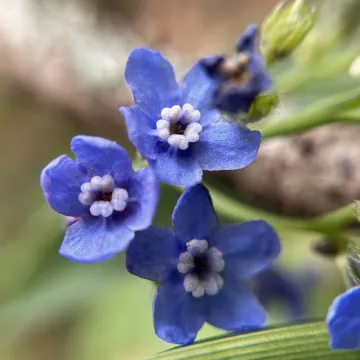
Botanically, it displays a basal rosette of large, lush green leaves followed by a sturdy stalk bearing loose panicles of vibrant blue or deep violet flowers. These flowers are distinct for their form and color, which attract early-season pollinators. The plant typically completes its active life cycle before the onset of the dry summer season.
Regarding cultivation, Cynoglossum grande requires well-draining, humus-rich soil that mimics a forest floor. It prefers partial to full shade and is highly sensitive to soil compaction and excessive heat. Consistent moisture is critical during the growth phase, but the soil should not remain waterlogged to prevent root rot.
In terms of usage, this plant is primarily utilized in shade gardens and native landscaping projects to provide early-season color. It faces minimal pressure from agricultural pests, although snails and slugs can be problematic in greenhouse or dense garden settings. Proper maintenance involves clearing debris and ensuring adequate airflow to minimize the risk of powdery mildew or fungal leaf spots.
Photo gallery