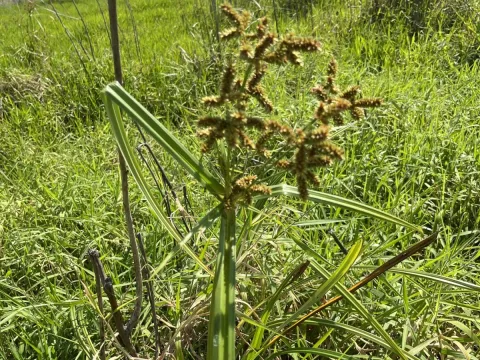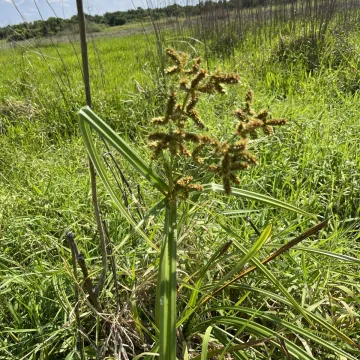
Foxtail flatsedge
Cyperus alopecuroides
Description
The foxtail flatsedge (Cyperus alopecuroides) is a perennial herbaceous plant belonging to the Cyperaceae family. It is a robust hydrophyte, typically thriving in waterlogged environments, wetlands, and along the margins of stagnant or slow-moving water bodies.
Originating from tropical and subtropical regions of Africa, Asia, and Australia, this species is well-adapted to warm climates. It has historically been utilized in areas where excessive soil moisture makes the cultivation of conventional crops difficult or impossible.
Botanically, the plant is characterized by its distinct triangular stems and terminal inflorescences that resemble the tail of a fox. Its root system is extensive and rhizomatous, allowing the plant to spread effectively in soft, muddy soils and helping to stabilize the shoreline where it grows.
Agricultural requirements focus heavily on hydration and soil quality. The species thrives in silt-rich, fertile substrates with a neutral to slightly acidic pH. Effective cultivation requires consistent saturation; therefore, irrigation management in artificial systems must replicate the natural flood-plains cycle to ensure optimal biomass production.
The economic value of this crop is multifaceted. It is often employed in bio-filtration systems to improve water quality through phytoremediation, reducing nutrient runoff. Additionally, its fibrous stems are harvested for traditional handicrafts and basket weaving, and in some contexts, it serves as a supplementary fodder source for livestock in arid regions.
Pests and diseases are generally manageable under proper ecological conditions. However, the plant can be susceptible to fungal infections in poorly ventilated environments or during periods of temperature fluctuations that stress the plant, making regular monitoring of leaf health essential for long-term productivity.
Photo gallery