Short-leaf spikesedge
Cyperus brevifolius
Description
Short-leaf spikesedge (Latin: Cyperus brevifolius) is a perennial herbaceous plant belonging to the Cyperaceae family. In agricultural settings, it is widely recognized as a problematic weed that thrives in moist, tropical, and subtropical environments, often interfering with the cultivation of aquatic or semi-aquatic crops such as rice.
Originating from tropical regions of Asia, the plant has successfully expanded its range across various continents. It is commonly found in wetlands, irrigation ditches, and damp agricultural fields. Its ability to colonize disturbed soils makes it a significant competitor for nutrients and space in various farming systems, particularly where irrigation is frequent.
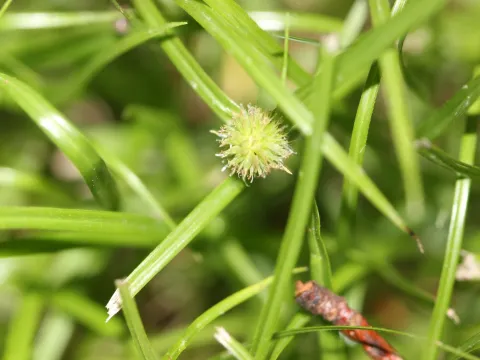
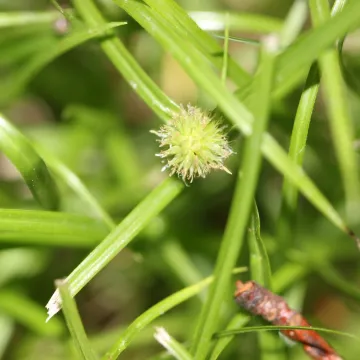
The morphology of Cyperus brevifolius is characterized by a vigorous rhizomatous root system, which allows for rapid vegetative propagation. The stems are typically triangular, reaching heights that vary based on local conditions, and the inflorescence consists of dense, small, green, cone-like heads. These anatomical features provide the plant with high resilience against environmental stressors.
Effective agricultural management of this species requires a combination of strategies. Chemical control via systemic herbicides is often necessary, as mechanical removal alone, such as tilling, can fragment the rhizomes and actually stimulate further growth. Improving soil drainage and crop rotation are essential cultural practices to suppress the expansion of this sedge in commercial fields.
Beyond its status as a weed, the plant has several identified uses. It is occasionally utilized in landscaping for erosion control on riverbanks or around artificial ponds. Furthermore, ongoing research explores its potential in traditional medicine and industrial applications, as its rhizomes contain compounds that may possess antimicrobial or anti-inflammatory properties.
- Strong rhizomatous growth pattern.
- High adaptability to waterlogged conditions.
- Difficult to eradicate through mechanical means.
- Significant invasive potential in agricultural zones.
Photo gallery