Compact sedge
Cyperus compactus
Description
Compact sedge (Cyperus compactus) is a perennial herbaceous plant belonging to the Cyperaceae family. It is a highly specialized hydrophyte that thrives in aquatic and semi-aquatic environments. In modern agronomy and environmental science, this species is increasingly recognized for its utility in ecological restoration projects and controlled wetland environments.
The plant originates from tropical and subtropical regions, predominantly found in floodplains, marshes, and riverbanks. Its natural distribution is linked to regions with consistent rainfall and warm climate cycles. When introduced to new regions, Cyperus compactus requires sheltered conditions or greenhouse management, as it lacks cold hardiness and is highly sensitive to frost and sudden drops in humidity.
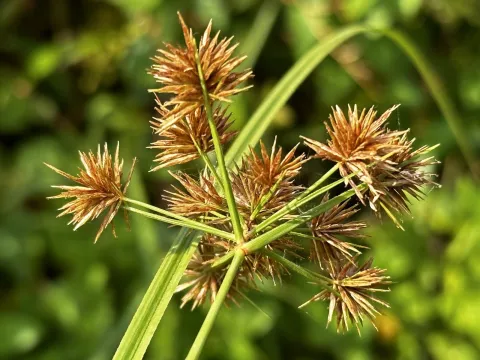
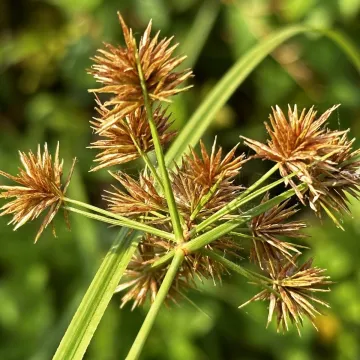
Botanically, the species is defined by its erect, triangular stems and a rosette of leaves clustered at the apex. The root system is primarily rhizomatous, allowing for rapid vegetative propagation and soil stabilization. The inflorescences are dense, head-like spikelets arranged in umbels, which distinguishes it from other species within the genus Cyperus. This compact structural architecture makes it an aesthetically pleasing choice for specific landscape design projects.
Cultivation practices involve maintaining a saturated soil moisture level, as the plant acts as an obligate wetland species. Preferred soils are loose, humus-rich media that allow for aeration despite the high water content. In terms of nutrient management, the plant benefits from periodic applications of balanced fertilizers to support vigorous growth. Weed control is rarely an issue due to the plant's natural ability to form dense, competitive clumps in suitable environments.
The primary economic use of Cyperus compactus is within wastewater treatment and ecological engineering. It is an effective species for nutrient uptake, significantly reducing nitrogen and phosphorus levels in water bodies. Regarding phytopathology, the crop is generally hardy, though it may be susceptible to root rot pathogens if water circulation is poor or if the substrate becomes anaerobic. Pest issues, such as spider mites, typically occur only when the plant is subjected to severe drought stress.
Photo gallery