Cyperus conglomeratus
Cyperus conglomeratus
Description
Cyperus conglomeratus is a resilient perennial herbaceous plant belonging to the Cyperaceae family. It is widely recognized for its ability to thrive in harsh desert and semi-desert environments, particularly in sandy habitats. As a key species in arid ecosystems, it demonstrates remarkable physiological adaptations to water scarcity and intense solar radiation.
The geographic range of this species extends across the arid belts of North Africa, the Middle East, and parts of Southwest Asia. It is commonly found in desert dune systems and dry plains. The plant has evolved to dominate areas with shifting sands, serving as a biological anchor that prevents landscape degradation in these challenging climates.
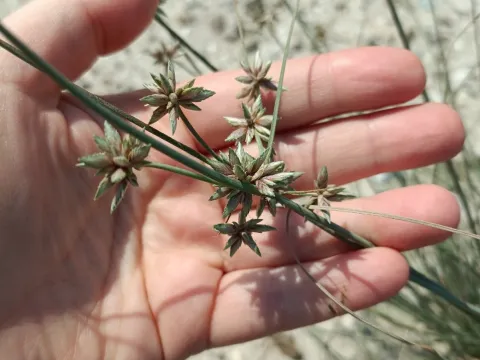
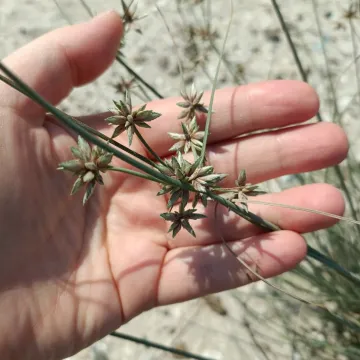
The botanical structure of the plant is defined by its deep, extensive rhizome system, which provides structural stability and access to deep-seated moisture. Its leaves are typically narrow and tough, with a high degree of lignification to minimize water loss. The inflorescences are characteristically congested into dense, rounded clusters, which facilitates effective wind-driven seed dispersal.
Regarding cultivation requirements, Cyperus conglomeratus is highly tolerant of poor, nutrient-deficient sandy soils and high salinity levels. It requires full sun exposure and is exceptionally drought-resistant. Agronomic interventions are generally minimal, as the plant is adapted to survive without human-led irrigation, relying entirely on ephemeral seasonal rains.
In agricultural practice, the primary uses include:
- Soil erosion control on sandy terrains.
- Forage provision for camelids and small ruminants.
- Restoration of degraded desert pasture lands.
Photo gallery