Thick-footed sedge
Cyperus crassipes
Description
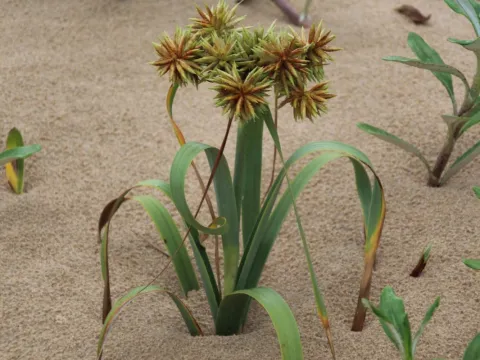
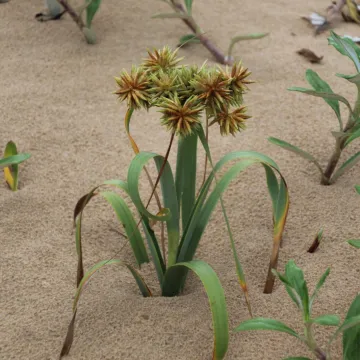
The thick-footed sedge (lat. Cyperus crassipes) is a perennial herbaceous plant belonging to the sedge family (Cyperaceae). This species is well-adapted to aquatic and semi-aquatic environments, functioning effectively in ecosystems where water saturation is the defining characteristic of the soil composition.
Originating from tropical and subtropical regions, this plant is primarily found in coastal zones and wetlands. Its ability to colonize sandy or silty substrates makes it a robust species in native areas, where it plays a critical role in the natural succession of marshland vegetation and soil stabilization.
Botanically, Cyperus crassipes is distinguished by its thickened stems, which serve as storage organs for water and nutrients, and its dense, fibrous root system. The leaves are rigid and linear, developed to withstand the environmental pressures of high solar exposure and fluctuating water levels typical of its natural habitat.
Cultivation requirements involve maintaining a high level of soil moisture and providing sufficient warmth to ensure continuous growth. The plant prefers loose substrates that allow for effective root penetration. Agricultural management is generally low-intensity, focusing on maintaining hydration levels and preventing overcrowding from invasive vegetation during the establishment phase.
The economic and agricultural utility of this species includes:
- harvesting biomass for organic livestock feed;
- crafting natural fibers for sustainable weaving and industrial use;
- utilization in erosion control for banks and riparian zones;
- environmental remediation through bio-filtration in constructed wetlands.
Common issues affecting this crop include rot-related fungal infections if the water becomes stagnant and oxygen-depleted. Pest control usually targets boring insects that may infiltrate the thickened stems. Maintaining a healthy balance of moisture and ensuring good drainage are the primary defense strategies for a successful crop cycle.
Photo gallery