Toothed flatsedge
Cyperus dentatus
Description
The Toothed flatsedge (Cyperus dentatus) is a perennial herbaceous plant belonging to the Cyperaceae family. It is a specialized hydrophyte that thrives in saturated soils and wetland environments. Its taxonomy and morphological traits identify it as a distinct species within the large Cyperus genus, valued primarily for its ecological roles rather than traditional agricultural harvest.
The native range of this species is primarily within North America. It is typically found in moist, sandy or silty habitats, such as the borders of ponds, lakes, and river banks. Because it is highly adapted to these specific environments, it serves as a key indicator of wetland health. Its ability to tolerate seasonal water level fluctuations is one of its most important adaptive features.
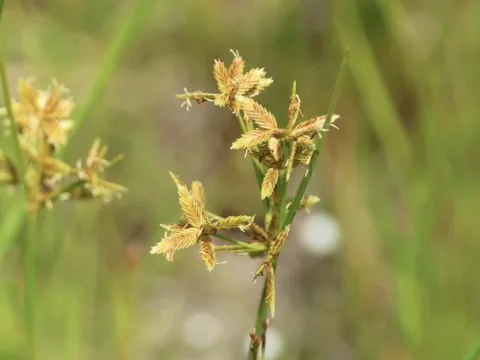
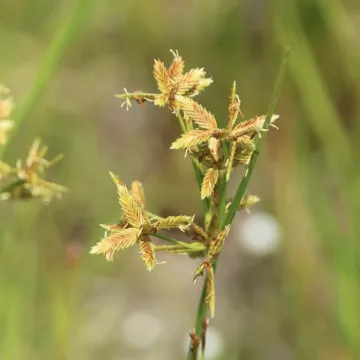
From a botanical perspective, the plant features slender, grass-like leaves rising from a fibrous root system. The stem is triangular in cross-section, which is characteristic of many sedges. The inflorescence consists of small spikelets arranged in a loose, umbel-like structure, with bracts that exhibit the characteristic toothed margins that define the species. The plant typically reaches heights ranging from 15 to 45 centimeters.
Agricultural and landscaping requirements involve maintaining high soil moisture levels and ensuring the plant receives adequate sunlight. While it is not a commodity crop, its agronomic value lies in its use for environmental restoration. It grows best in acidic, nutrient-poor, sandy soils, making it an excellent candidate for stabilizing sandy banks where other plants might fail to establish.
Key areas of application include:
- Phytoremediation and water purification in artificial wetlands.
- Erosion control along the edges of ponds and reservoirs.
- Bio-landscape design for ornamental aquatic gardens.
Regarding pest and disease management, the plant is relatively hardy and rarely suffers from major infestations in its natural setting. Potential challenges include competition from more aggressive invasive wetland species or diseases associated with poor aeration if the water becomes completely stagnant for prolonged periods. Maintaining natural light and water flow is generally sufficient to keep the plant in good health.
Photo gallery