Pale galingale
Cyperus eragrostis
Description
Pale galingale (Cyperus eragrostis) is a perennial herbaceous plant belonging to the Cyperaceae family. In agricultural contexts, it is primarily recognized as a persistent weed found in wetlands, irrigated fields, and disturbed areas, though it is occasionally valued as an ornamental grass in garden design.
Native to South America, the species has successfully naturalized in many regions across North America, Europe, and Australia. Its range is strictly tied to moist environments, including riverbanks, ditches, and agricultural areas with high water tables, where it can behave as an invasive colonizer.
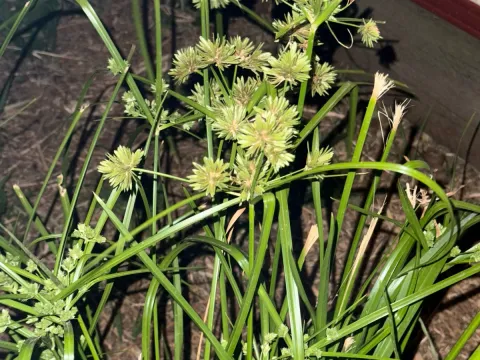
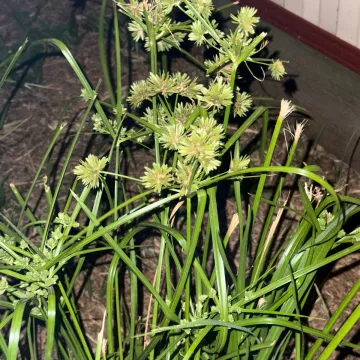
Botanically, the plant is characterized by its triangular stems that can reach nearly a meter in height. The foliage consists of long, linear, grass-like leaves. Its defining feature is the globose to oblong-ovate inflorescence composed of dense clusters of greenish-straw-colored spikelets, which remain visible throughout the summer and early autumn.
The plant thrives in wet to saturated soils and prefers sunny to partially shaded exposures. Its growth is supported by a robust root system featuring short rhizomes, which make it resilient to mechanical disturbance. As a weed, its ability to survive in waterlogged conditions makes it a significant competitor for resources in crops like rice or wetland vegetables.
Management of the species requires integrated approaches, as traditional cultivation practices often fail against its rhizomatous growth. While the plant is rarely threatened by major pests, it is sensitive to severe drying of the soil. Controlling its spread involves careful monitoring of water management systems and timely mechanical removal before the seeds reach maturity to prevent infestation of irrigation canals.
Photo gallery