Brown galingale
Cyperus fuscus
Description
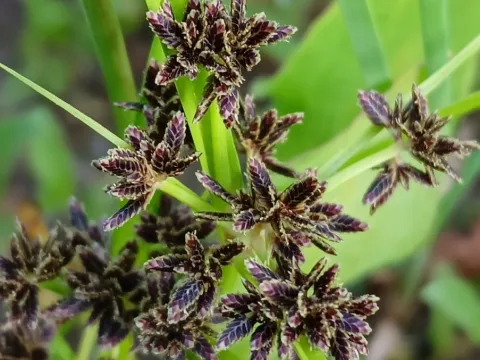
Brown galingale (lat. Cyperus fuscus) is an annual herbaceous plant belonging to the Cyperaceae family. In agricultural terms, it is typically classified as a weed that thrives in waterlogged areas, although it performs a significant ecological function in floodplain meadows and riparian habitats.
The distribution range of the species covers vast areas of Eurasia and North Africa. The plant is adapted to temperate and subtropical climates, actively colonizing lake shores, damp meadows, rice paddies, and lands with disturbed hydrological regimes where high soil moisture is maintained for long periods.
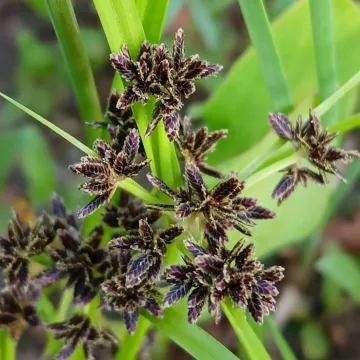
Botanically, the plant reaches a height of 10–30 cm. It features smooth, triangular stems surrounded by leaf sheaths at the base. The inflorescence is umbel-like, consisting of dark brown or nearly black spikelets, which gives the plant its common name. The root system is fibrous and capable of rapid development in wet conditions.
The soil requirements for brown galingale are quite specific: it prefers silty, sandy, or clay substrates with high moisture levels. Agronomic management involves improving soil drainage to suppress its growth. Chemical control is typically only justified in commercial fields, such as rice paddies, where the species can compete heavily with crops for resources.
The economic impact of the species is generally minimal, as it primarily serves as a bioindicator of moisture levels. It is susceptible to various fungal diseases common to sedges, which, under specific conditions, can become a source of inoculum for other nearby flora. Pests include insects typically found in wetland vegetation, which rarely cause significant economic damage to conventional crops.
Photo gallery