Giant papyrus
Cyperus giganteus
Description
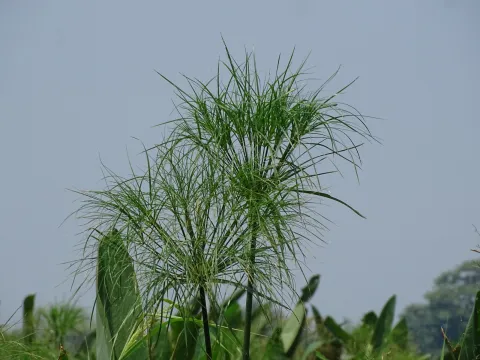
Giant papyrus (Cyperus giganteus) is a robust, perennial herbaceous plant belonging to the Cyperaceae family. Often confused with common papyrus due to its striking appearance, it is distinguished by its significantly larger size and sturdy, triangular-sectioned stems. As a hydrophyte, this species has evolved to thrive in wetland environments, making it a specialized crop for specific aquatic agricultural settings.
The plant is native to the tropical regions of Central and South America, particularly thriving in humid lowland areas and riverbanks. It requires a warm, frost-free climate to maintain its vigorous growth rates throughout the year. Cultivation efforts are typically localized to regions where tropical or subtropical conditions can satisfy its high temperature and humidity requirements.
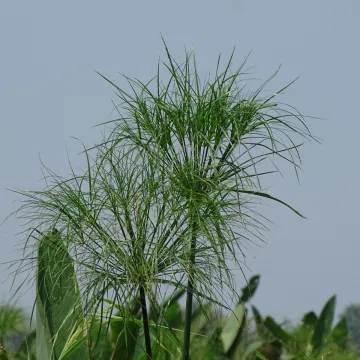
Botanically, Cyperus giganteus is characterized by a creeping rhizome system that supports tall, leafless culms. At the apex of each stem, large, compound umbel inflorescences develop, surrounded by elegant bracts. These features contribute to its high biomass productivity, which is a key asset for commercial cultivation in sustainable agricultural systems.
The agronomy of giant papyrus focuses on water management and soil fertility. It demands consistently saturated, nutrient-rich soils to reach its full height and fiber density. Propagation is primarily achieved through rhizome division, which ensures rapid colonization of wetland fields. Strategic nitrogen application during the peak growing season is essential for maximizing yield in industrial fiber production projects.
Economic and utility applications for this species include:
- Industrial-scale production of high-quality cellulose for papermaking.
- Utilization of fiber in the textile and weaving industries for mats and baskets.
- Phytoremediation projects to treat wastewater and restore nutrient-laden wetlands.
- Landscape use in large-scale ornamental water garden installations.
Regarding health management, Cyperus giganteus is generally resilient but susceptible to fungal infections if stagnant water conditions become anaerobic. Common pests include various stem-boring insects and soil nematodes that can stress the plant in improperly managed fields. Integrated pest management, focusing on biological controls and water circulation optimization, is the most effective approach for ensuring long-term yield stability.
Photo gallery