Shingle flatsedge
Cyperus imbricatus
Description
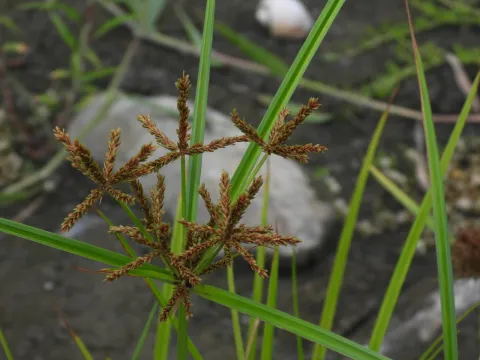
Shingle flatsedge (Cyperus imbricatus) is a perennial herbaceous plant belonging to the Cyperaceae family. Often found in marshy habitats, this species is recognized for its dense, imbricate inflorescences that give the plant its characteristic appearance, separating it from other common members of the genus Cyperus.
Native to tropical and subtropical regions of the Americas, Africa, and parts of Asia, this plant thrives in warm climates. It is predominantly found in habitats characterized by persistent moisture, including wetlands, riverbanks, and areas prone to seasonal flooding, where it plays an important role in local biodiversity.
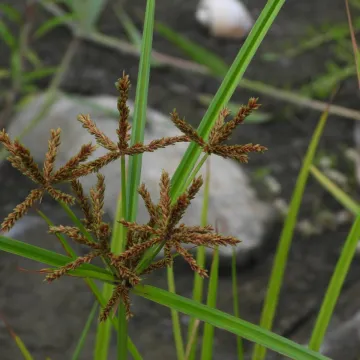
Botanically, Cyperus imbricatus features robust culms that can grow up to a meter or more in height. The plant displays narrow, leathery leaves and complex umbellate inflorescences. The spikelets are tightly packed in an overlapping, shingle-like pattern, which serves as a highly efficient mechanism for seed dispersal and protection in wet environments.
Cultivation requirements for this species are centered on water availability and light exposure. It performs best in heavy, silt-rich soils that retain moisture throughout the growing season. While it is hardy in its native habitat, agricultural success depends on maintaining a waterlogged environment, as the plant does not tolerate prolonged drought conditions.
Economically, Shingle flatsedge is utilized for various industrial and agricultural purposes. In many regions, the fibrous stems are harvested for weaving, creating traditional baskets and mats. Additionally, in regions where it grows abundantly, it may serve as supplemental forage for livestock that are adapted to grazing in wet, low-lying pastures, effectively turning flooded marginal lands into productive areas.
- Requires consistent soil saturation.
- High biomass production potential in wetlands.
- Fibrous content suitable for local handicrafts.
- Adaptable to diverse tropical climates.
Photo gallery