
Broadleaf flatsedge
Cyperus latifolius
Description
Broadleaf flatsedge (Cyperus latifolius) is a perennial herbaceous plant belonging to the Cyperaceae family. It is recognized in agricultural science as a highly specialized wetland crop, thriving in hydric soils and aquatic environments where other traditional crops fail to establish.
The plant originates from the tropical regions of Africa, where it naturally inhabits floodplains, marshes, and riverbanks. Its cultivation range is strictly confined to warm climates, as the species lacks cold hardiness. In modern agricultural practice, it is utilized in specific regional settings that mimic its native habitat conditions.
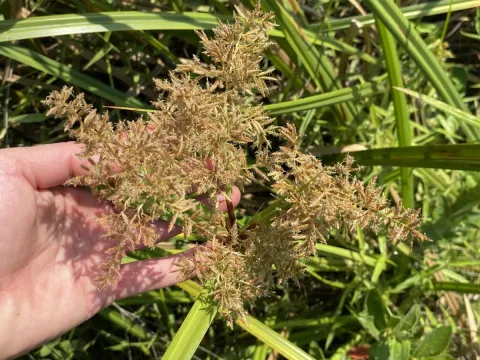
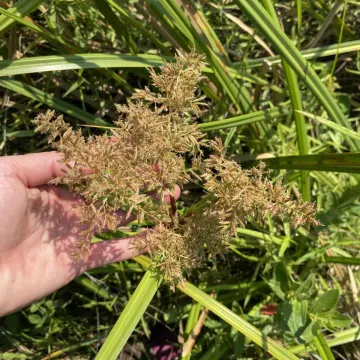
Botanically, it is characterized by robust, creeping rhizomes and erect stems bearing wide, characteristic foliage. The inflorescence consists of umbel-like spikes that produce significant quantities of seeds. This structural morphology allows the plant to form dense colonies, effectively protecting the soil surface and promoting biomass accumulation.
Successful production requires specific agronomic management, primarily focused on maintaining soil saturation or shallow water levels. The crop prefers nutrient-rich silty or clay soils with near-neutral pH levels. Regular monitoring of water quality is essential, as the plant is sensitive to high salinity levels, which can impair its growth and vitality.
Economic and agricultural applications include:
- Utilization of stalks in traditional weaving and handicraft industries.
- Deployment as a vegetative filter for water purification and site remediation.
- Potential use as a source of biomass for organic substrate development.
- Providing ecosystem services in agricultural landscapes, such as erosion control.
Diseases are primarily associated with fungal pathogens that thrive in low-oxygen aquatic environments, leading to root rot. Pests, such as aphids and specific beetles, can affect plant health during the rapid growth phase. Integrated pest management, focusing on biological controls and appropriate planting density, is recommended to ensure sustainable yields.
Photo gallery