Micheli's galingale
Cyperus michelianus
Description
Micheli's galingale (Cyperus michelianus) is an annual herbaceous plant belonging to the Cyperaceae family. Within agricultural systems, it is generally classified as a hydrophilic weed, often appearing in areas where irrigation or high groundwater levels create permanently moist soil conditions.
This species is widely distributed across Europe, Asia, and parts of Africa. Its natural range encompasses riverbanks, marshes, and low-lying agricultural fields. It thrives in habitats where the soil remains saturated for significant portions of the growing season, showing high adaptability to varying water levels.
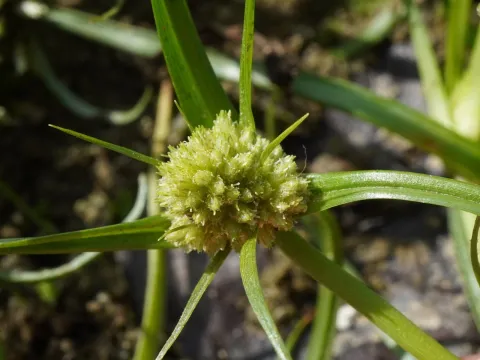
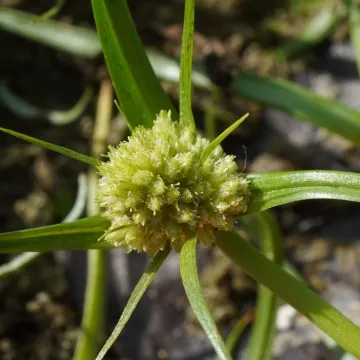
Botanically, the plant is characterized by its compact, head-like inflorescences and long, leaf-like bracts that give it a distinctive appearance. As an annual, it relies entirely on seed production for regeneration. The seeds are highly resilient and capable of germinating in muddy substrates where other plants might struggle due to lack of oxygen.
Agricultural requirements for the growth of Cyperus michelianus focus heavily on soil moisture and photoperiod. In commercial farming, agronomic control is primarily achieved through effective land drainage systems and the improvement of soil structure. Mechanical weeding and precise cultivation are essential in the early growth stages to prevent population expansion.
While the economic value of Micheli's galingale is minimal in conventional cropping, it serves as an indicator plant for hydrological conditions in field scouting. Key agricultural considerations for managing this plant include:
- Monitoring potential competition with moisture-loving crops in flooded paddies.
- Preventing seed bank accumulation in heavy, poorly drained soil types.
- Mitigating risks of pest harborage in dense weed patches near water sources.
Photo gallery