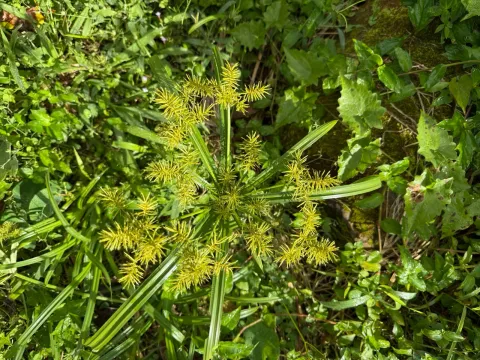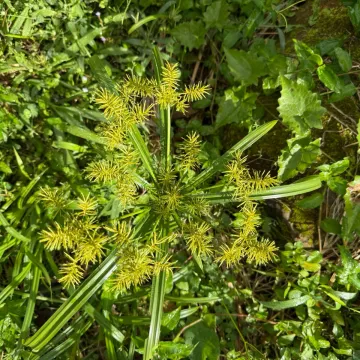
Fragrant flatsedge
Cyperus odoratus
Description
Fragrant flatsedge (Cyperus odoratus) is a significant plant species within the Cyperaceae family. Unlike standard upland crops, this plant thrives in wetland environments, making it a subject of interest for specialized agricultural practices focused on the sustainable use of riparian zones and swampy terrain.
The species originated in the Americas and has established a wide distribution range across tropical and temperate climates globally. As an agricultural commodity, it is cultivated primarily in regions where water management allows for the utilization of aquatic and semi-aquatic botanical resources. Its ability to tolerate saturated soils provides a unique advantage in diverse agro-ecological systems.
Morphologically, the plant is characterized by triangular stems and linear, basal leaves. It typically grows to a height of 60 to 90 centimeters. The root system is robust, featuring rhizomes that facilitate efficient nutrient uptake from waterlogged substrates. These structural traits make the fragrant flatsedge an excellent candidate for restoring degraded wetlands and stabilizing shoreline areas.
Agronomic management of Cyperus odoratus relies heavily on soil hydrology and light availability. It prefers nutrient-rich silt or organic soils with consistent moisture levels. While it is naturally hardy, farmers ensure maximum yield by monitoring water depth, ensuring the root zone remains saturated without experiencing prolonged stagnation that could promote anaerobic conditions and hinder growth.
The economic value of this crop is multifaceted. Primarily, it is harvested for its essential oils contained within the rhizomes, which are utilized in various industrial and pharmaceutical applications. Additionally, the plant acts as a natural bio-filter in agricultural runoff management. Farmers must remain vigilant regarding potential pests, such as stem-boring insects, and fungal pathogens that often thrive in high-humidity environments.
Photo gallery