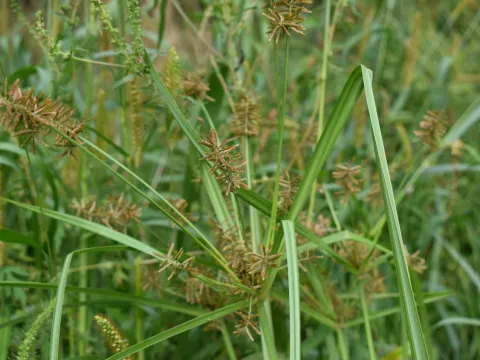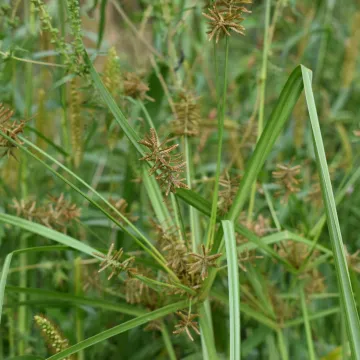
Cyperus orthostachyus
Cyperus orthostachyus
Description
Cyperus orthostachyus is a perennial herbaceous plant belonging to the large Cyperaceae family. In agricultural practice, this species is valued for its high adaptability to waterlogged soils, making it a promising candidate for drainage areas and pond biofiltration systems.
The natural range of Cyperus orthostachyus encompasses primarily temperate and tropical latitudes of East Asia. The plant prefers open, well-lit sites with high groundwater tables and is frequently found along riverbanks, lakes, and marshes, where other forage crops fail to thrive.
Botanically, the plant forms a dense cluster with erect, triangular-shaped stems. The leaves are narrow, linear, and basal, forming a thick rosette. A well-developed root system allows the crop to effectively stabilize soil, preventing erosion in areas characterized by excess moisture.
Agronomic requirements include maintaining stable substrate moisture levels. Cyperus orthostachyus is highly responsive to organic fertilizer applications during the peak growing season. The optimal temperature range for growth is 20–25°C. Managing planting density is crucial, as the plant tends to spread aggressively through vegetative reproduction.
The economic utilization of Cyperus orthostachyus includes several key areas:
- Establishing high-protein forage bases on flooded pastures.
- Utilizing biomass as a raw material for fiber production.
- Phytoremediation efforts to clean wastewater and nitrogen-rich landscapes.
- Landscape design for the aesthetic enhancement of aquatic environments.
Common cultivation challenges include susceptibility to rust fungi under conditions of stagnant air and damage from root-zone pests such as wireworms. Proper drainage techniques and strict adherence to crop rotation schedules are essential to minimize disease risks and ensure sustainable crop yields.
Photo gallery