Hungarian galingale
Cyperus pannonicus
Description
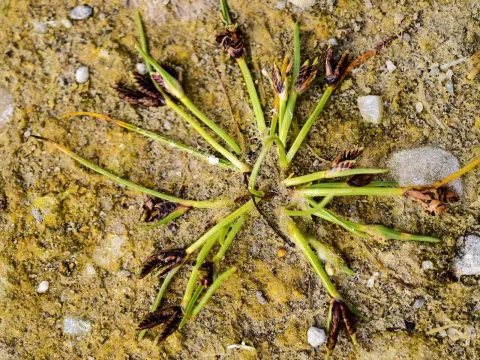
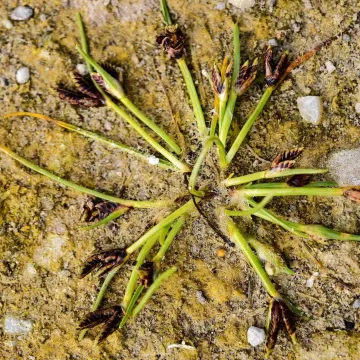
Hungarian galingale (Cyperus pannonicus) is a perennial herbaceous plant belonging to the Cyperaceae family. It is a specialized botanical species recognized for its ability to thrive in challenging environments, particularly in saline soils and habitats with fluctuating water levels, which makes it an interesting subject for ecological and agricultural research.
The botanical profile of the plant is characterized by slender, upright stems and narrow leaves, typical of many Cyperus species. The root system is robust and fibrous, providing the plant with the necessary stability to anchor itself in moist or periodically submerged substrates. Its inflorescences are distinct clusters of spikelets that contribute to its reproductive success in open, exposed meadow environments.
The native range of Cyperus pannonicus is primarily located within the salt-affected plains and riparian zones of Central and Eastern Europe. It evolved to colonize areas where high salt concentrations limit the growth of standard agricultural crops. This geographical range highlights the plant's adaptation to extreme soil conditions and its role as a pioneer species in saline ecosystems.
Agronomic management of this species revolves around water and soil salinity maintenance. It requires consistently moist conditions and specific soil mineral profiles to thrive. Unlike traditional crops, it does not require typical fertilization regimes; instead, it relies on the natural nutrient and mineral cycles present in its saline habitats. Proper management of the local hydrology is the most critical factor for its successful growth.
In practical terms, Hungarian galingale is utilized primarily for land reclamation, soil stabilization, and biodiversity conservation. Its role in phytoremediation is significant, as it can help manage saline soil properties. While it is not a major fodder crop, it serves as a valuable component in restored wetlands. Pests and diseases are rarely a concern in their native habitats, as the species has adapted to survive the specific stressors of their environment.
- Family: Cyperaceae
- Plant type: Perennial herb
- Ideal climate: Temperate, wetland conditions
- Primary use: Land reclamation, environmental restoration
- Characteristic: Salt-tolerant (halophytic)
Photo gallery