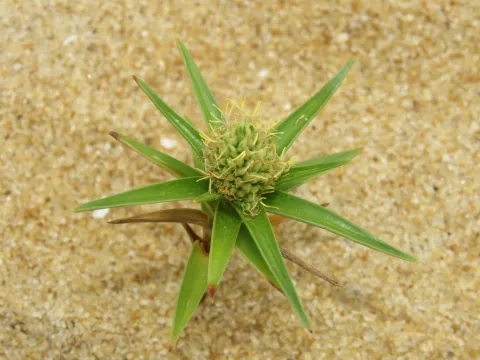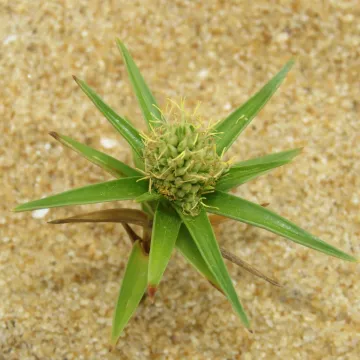
Cyperus pedunculatus
Cyperus pedunculatus
Description
Cyperus pedunculatus is a perennial herbaceous plant belonging to the Cyperaceae family. It is a highly specialized species that has evolved to thrive in coastal habitats, specifically on sandy beaches and dunes. Unlike typical sedges that occupy wetlands, this plant displays remarkable endurance against salinity and mechanical stress from wind-blown sand.
The origin and distribution of this species span various tropical and subtropical coastal zones around the globe. It is a dominant pioneer species in sandy ecosystems, where its deep and creeping rhizome system helps anchor moving sands. By binding the substrate, Cyperus pedunculatus facilitates the succession of other vegetation in hostile environments.
Botanically, the plant features narrow, toughened leaves and distinct pedunculate inflorescences. Its structural integrity allows it to withstand being partially buried by sand, a common phenomenon in its native habitat. The plant's ability to propagate vegetatively via rhizomes makes it an aggressive colonizer of unstable coastal tracts.
Regarding climate and soil requirements, Cyperus pedunculatus demands full sun exposure and well-drained, sandy soils. It is exceptionally drought-tolerant and thrives in nutrient-poor environments where most other vegetation would fail. Agronomic intervention is rarely required, as the plant is self-sufficient in its natural ecological niche, though controlled plantings are performed for environmental stabilization.
- Excellent tolerance to saline coastal air and soil.
- Key role in preventing coastal erosion.
- Low maintenance requirements.
- Effective rhizomatous growth habit.
The primary agricultural and environmental use of Cyperus pedunculatus is in phytoremediation and land stabilization projects. It is widely recognized for its utility in protecting coastlines from erosion caused by storms and rising tides. By stabilizing the dunes, the plant acts as a natural safeguard, preventing sand encroachment into neighboring agricultural fields or residential infrastructure.
Photo gallery