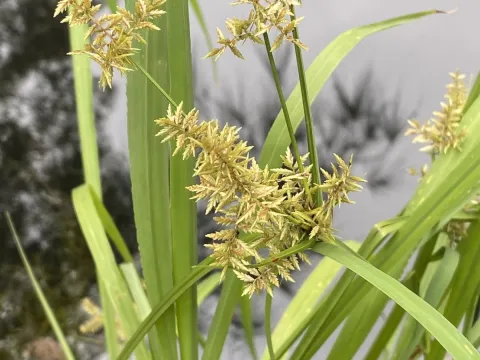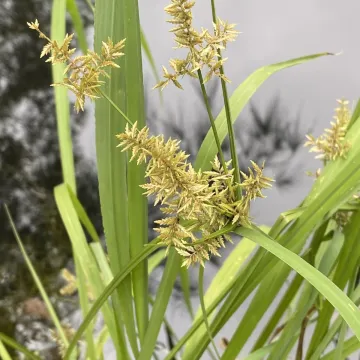
Hairy flatsedge
Cyperus pilosus
Description
Hairy flatsedge (Cyperus pilosus) is a perennial herbaceous plant belonging to the Cyperaceae family. It is recognized as a significant wetland crop that thrives in saturated soils and is frequently adapted to the environmental conditions found in tropical and subtropical regions.
The native distribution of this species spans across large areas of Asia, Africa, and Australia. It is commonly found in riparian zones, marshy wetlands, and cultivated rice fields, where it behaves as a robust competitor in high-moisture environments.
Botanically, it is distinguished by its creeping rhizomes and triangular stems that can reach substantial heights. The leaves are linear, and the inflorescence consists of compound umbels with leafy bracts. These features make it highly efficient at capturing sunlight in open, water-logged habitats.
The agronomic requirements for growing Cyperus pilosus center on constant soil moisture and nutrient-rich, silty substrates. Successful cultivation involves managing the plant's aggressive vegetative spread through controlled density techniques, ensuring optimal biomass production while preventing soil exhaustion.
The economic utility of the plant includes its use as forage for specific livestock and its potential as a source of fiber for local craft production. Farmers should be aware of potential fungal outbreaks caused by high humidity and pests that target aquatic sedges, requiring proactive management to maintain crop health.
Photo gallery