Retrorse flatsedge
Cyperus retrorsus
Description
Retrorse flatsedge (Cyperus retrorsus) is a perennial herbaceous plant belonging to the Cyperaceae family. In agronomy, it is primarily recognized as a persistent weed species that can significantly impact crop yields by competing for resources in fields, pastures, and disturbed land across its primary habitats.
Native to North and South America, this species is well-adapted to a variety of climates and soil types. It flourishes in moist, well-lit environments and is frequently identified in agricultural fields where soil moisture is sufficient. Its ability to propagate through both seeds and underground rhizomes makes it a challenging species to manage in long-term cultivation systems.
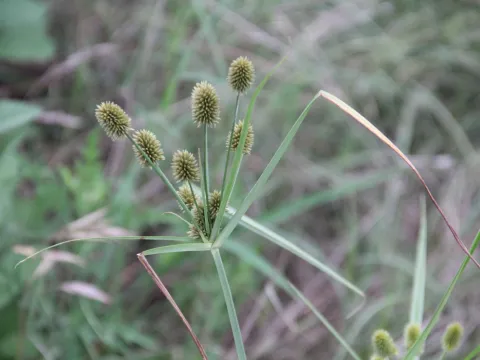
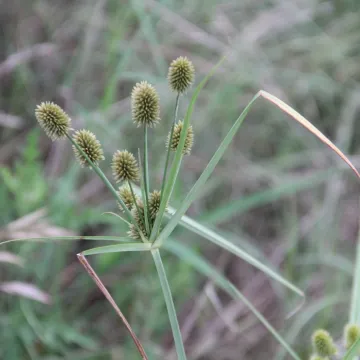
Botanically, the plant is identified by its upright stems and linear leaves clustered at the base. The inflorescence is unique, consisting of dense, spike-like clusters that turn downward (retrorse) as they reach maturity, which serves as the diagnostic feature for species identification. The root system is robust and serves as a nutrient storage organ.
The agronomic management of this species requires a multi-faceted strategy due to its resilience. Traditional tillage methods often fail because soil disturbance can inadvertently propagate rhizome fragments, leading to new growth. Therefore, professional integrated weed management often relies on systemic herbicide applications that can effectively penetrate the underground storage organs.
While not a commercially grown crop, understanding the biological cycle of this plant is vital for crop protection. It currently faces little pressure from pests or diseases that would naturally limit its expansion in agricultural zones. Consequently, chemical and cultural control methods, including competitive planting to shade out young shoots, remain the most reliable ways to maintain field health.
Photo gallery