Cyperus seslerioides
Cyperus seslerioides
Description
Cyperus seslerioides is a perennial herbaceous plant belonging to the Cyperaceae family. It is a specialized species that occupies specific ecological niches in tropical regions, exhibiting high morphological adaptability to varying environmental stresses characteristic of African savanna landscapes.
The plant originates from the African continent, where it is distributed across diverse altitudinal ranges. Its presence in both lowland and high-altitude grassland ecosystems highlights its evolutionary success in navigating distinct climatic pressures, such as temperature fluctuations and irregular rainfall patterns.
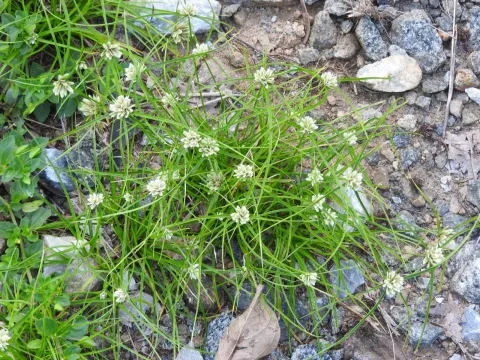
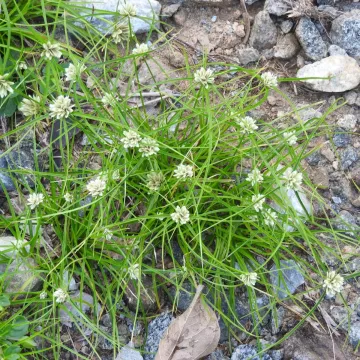
Botanically, the species forms compact tufts, a structural adaptation that facilitates moisture retention and stabilizes the soil. Its root system is deep enough to access subsurface water, while its foliage exhibits a texture resistant to excessive transpiration, allowing the plant to maintain biological functions during dry seasons.
In terms of cultivation requirements, Cyperus seslerioides thrives in well-drained soils, including rocky or gravelly substrates that might be unsuitable for more sensitive crops. Agricultural management focuses on soil conservation and grazing intensity, as the plant is relatively resilient to low soil fertility and minimal human intervention.
- Perennial life cycle
- High tolerance for poor soil conditions
- Soil stabilization properties
- Significant biomass production for livestock
The primary agricultural use of this species is as a component of natural pasture systems. It serves as a vital forage source, particularly in regions where grazing quality fluctuates seasonally. The plant provides necessary sustenance for herbivores, acting as a buffer against total food shortages during dry periods.
Photo gallery