Awned flatsedge
Cyperus squarrosus
Description
Awned flatsedge (Cyperus squarrosus) is a significant species belonging to the Cyperaceae family. Often recognized for its distinctively shaped spikelets, this annual plant is widely distributed across various environmental zones. In agriculture, it is typically categorized as a sedge that thrives in moist, disturbed habitats, often impacting water-dependent crop systems.
The species has a broad geographical distribution, appearing in North America, South America, Asia, and Australia. It is commonly found in riparian zones, wetlands, and flooded agricultural fields. Its ability to colonize damp substrates quickly makes it a notable presence in irrigated ecosystems where moisture levels are consistently high throughout the growing season.
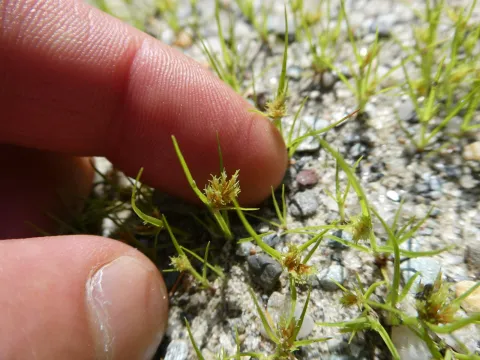
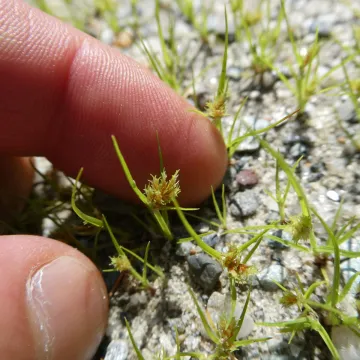
Botanically, the plant is characterized by its slender, triangular stems and its unique inflorescence. The spikelets possess recurved, awn-like scales, which provide the plant with its scientific name and a rugged appearance. The root system is generally fibrous and shallow, allowing it to rapidly establish itself in moist mud or silt.
Regarding cultivation and environmental requirements, this species demands high soil moisture and plenty of sunlight. It is not shade-tolerant and prefers nutrient-rich, fine-textured soils. Agricultural management often requires controlling the water table and utilizing mechanical weeding techniques in early growth stages to prevent the sedge from competing with primary crops for nitrogen and light.
While Cyperus squarrosus does not have significant commercial value, it serves as an indicator species for soil moisture levels. Its presence can signal that irrigation or drainage systems in a field may require maintenance. Disease and pest pressure on this plant are generally low, as it acts as a hardy opportunistic colonizer, though it remains a target for weed control protocols to ensure field hygiene.
Photo gallery