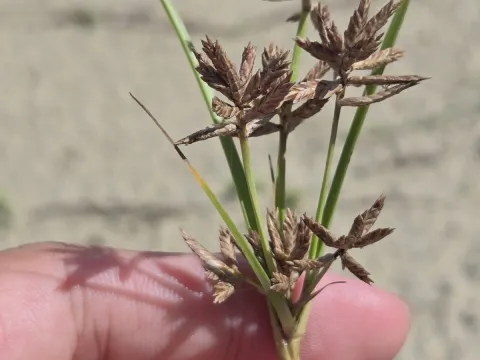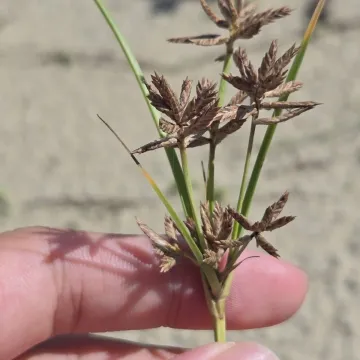
Cyperus stoloniferus
Cyperus stoloniferus
Description
Cyperus stoloniferus is a perennial herbaceous plant belonging to the Cyperaceae family. It is recognized as a hardy species with a distinct biological adaptation mechanism characterized by an extensive underground system of stolons, which allow the plant to thrive in unstable soil environments and propagate efficiently.
The plant originates from tropical and subtropical coastal regions across Asia, Africa, and Australia. It is naturally found in saline-tolerant habitats, such as estuarine areas, marshes, and sandy riverbanks, demonstrating high resilience to fluctuating moisture levels and varying soil mineral content.
Botanically, it features slender, grass-like leaves and triangular stems typical of the sedge family. The most defining feature is the presence of rhizome-like stolons that terminate in small, fleshy tubers. These tubers act as nutrient storage organs, supporting the plant’s survival during adverse environmental conditions and facilitating colonization.
Agronomic management requires high soil moisture, as the plant is a dedicated hydrophyte. It thrives in well-lit areas where solar exposure is consistent. While it can handle salt-affected soils better than many other crops, it prefers sandy or sandy-loam textures with organic matter enrichment to optimize tuber production and canopy density.
The economic value of this species lies in its role as a soil stabilizer, preventing coastal erosion through its dense root architecture. Additionally, the tubers are utilized in traditional medicine and industrial extracts. Common management challenges involve preventing fungal leaf spot and root rot, which may occur in waterlogged conditions with poor circulation, and monitoring for pests such as stem-boring insects.
Photo gallery