Surinam flatsedge
Cyperus surinamensis
Description
Surinam flatsedge (lat. Cyperus surinamensis) is a perennial herbaceous plant belonging to the Cyperaceae (sedge) family. This species is widely recognized for its robust nature and its preference for habitats characterized by high soil moisture, making it a prominent member of wetland vegetation in its native regions.
The origin of this species is primarily the tropical and subtropical regions of the Americas, spanning from the southern United States through Central America down to South America. It typically inhabits marshes, wetlands, riverbanks, and other areas where the water table remains close to the surface throughout the growing season.
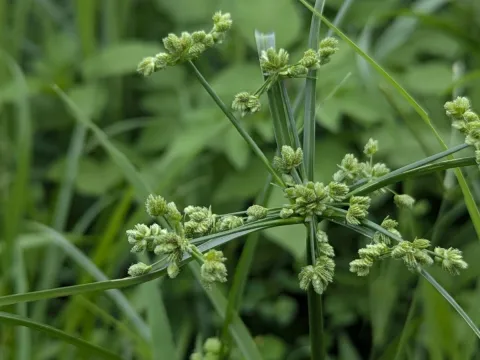
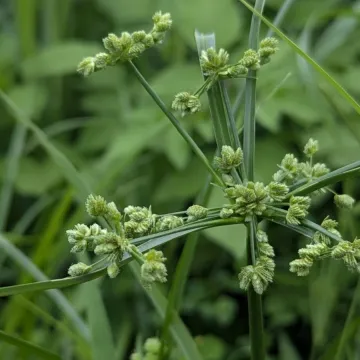
Botanically, the plant is identified by its strong, fibrous root system and upright, triangular stems. The leaves are linear and grass-like, arising from the base. The inflorescences are distinct umbel-like clusters subtended by leafy bracts, which provide the plant with a unique, ornamental structure that is highly characteristic of the Cyperus genus.
Regarding agrotechnical requirements, the plant thrives in rich, moist-to-wet soils. It is highly intolerant of drought, so irrigation must be frequent and consistent if the natural water supply is insufficient. It performs best in full sun but can tolerate partial shade. While it is not traditionally a commercial crop, its management often involves soil moisture control to encourage or inhibit its spread.
The primary uses for Surinam flatsedge are centered on ornamental horticulture, particularly in aquatic garden design, the creation of rain gardens, and ecological restoration of shoreline habitats. Its ability to absorb nutrients makes it useful for phytoremediation in constructed wetlands intended for water quality improvement and habitat stabilization.
- Requires consistently moist to waterlogged soil conditions.
- Thrives in full sun or light shade environments.
- Can be considered invasive in some managed agricultural systems.
- Benefits from occasional fertilization with organic matter.
Common issues include fungal pathogens that thrive in stagnant, humid environments, such as leaf spot or rust diseases. Pests can include typical sedge-feeding insects, including certain aphids or mites. Maintenance practices should focus on keeping the area clean of debris and ensuring proper water circulation to minimize disease pressure and manage potential overgrowth.
Photo gallery