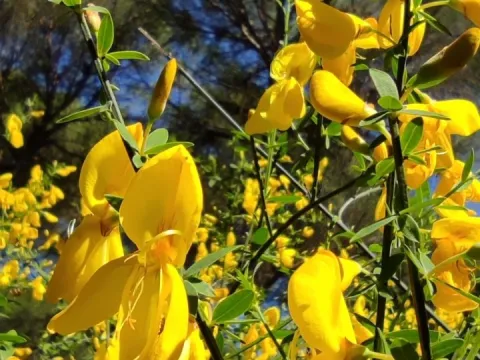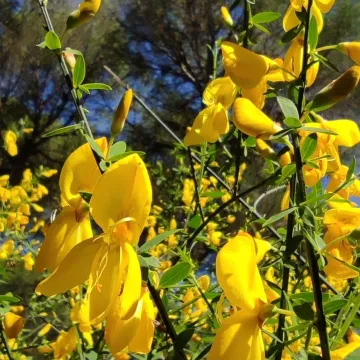
Large-flowered broom
Cytisus grandiflorus
Description
Large-flowered broom (Cytisus grandiflorus) is a perennial deciduous shrub belonging to the Fabaceae family. This ornamental plant is highly valued for its intense flowering period, during which the branches become completely covered with vibrant, large yellow flowers, making it a standout feature in any landscape design.
Originating from Southwestern Europe and North Africa, this species is well-adapted to dry, sunny environments. In its natural habitat, it thrives on rocky slopes and sandy soils. As a cultivated plant, it has proven to be a popular choice for gardens and parks in regions with similar climatic conditions, favoring open areas with plenty of sunlight.
Botanically, the plant is characterized by flexible, green branches and small trifoliate leaves. It develops a deep taproot system, which contributes to its resilience during dry spells. The shrub grows to a moderate height, and its structure allows it to adapt to various garden styles, including rock gardens, xeriscapes, or as a foreground plant in shrub borders.
Successful cultivation of this broom requires well-drained, acidic to neutral soil. It is crucial to choose a location that receives full sun and is sheltered from harsh, drying winds. Due to its sensitivity to waterlogging, planting it on elevated sites or in sandy substrates is recommended to ensure root health and longevity.
- Watering: minimal; only needed during extended droughts.
- Fertilization: light application of balanced fertilizers in early spring.
- Pruning: mandatory shaping and deadwood removal after blooming to stimulate density.
- Winter protection: mulch the base and protect young plants from frost.
Common health issues include powdery mildew and leaf spot diseases, typically triggered by high humidity or poor air circulation. Pests like aphids or spider mites may occasionally affect the foliage. Implementing good maintenance practices, such as proper spacing and periodic monitoring, is key to preventing infestations and maintaining the vigor of the plant.
Photo gallery