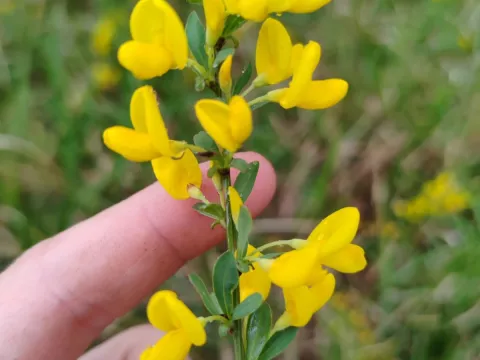

False procumbent broom
Cytisus pseudoprocumbens
Description
Cytisus pseudoprocumbens, commonly known as the false procumbent broom, is a low-growing, mat-forming shrub that belongs to the Fabaceae (legume) family. This species is highly regarded for its structural beauty and its spectacular display of bright yellow flowers, making it a staple in specialized horticultural applications.
The plant originates from the regions of Central and Southeastern Europe. It is naturally adapted to rocky habitats, dry grasslands, and mountainous slopes. This evolutionary history makes it an exceptionally hardy plant, capable of thriving in nutrient-poor substrates where other crops might fail to establish.
From a botanical standpoint, the shrub features slender, dense branches that typically grow horizontally or trail along the ground. Its leaves are small and often pubescent, an adaptation designed to reduce transpiration. The flowers are typically yellow, papilionaceous, and bloom in late spring, creating a brilliant, carpet-like effect across the plant canopy.
Agricultural and horticultural requirements focus primarily on soil composition and water management. The plant demands well-draining, gritty, or sandy soils with a neutral to alkaline pH. It is highly drought-tolerant once established and does not require frequent fertilization. Pruning should be kept to a minimum, primarily to remove dead wood or to maintain the desired shape.
The primary use for this species is ornamental, particularly in rock gardens, dry stone walls, and as a groundcover for erosion control on slopes. While it is generally a robust plant, it can be susceptible to common issues such as powdery mildew in poorly ventilated environments or aphid infestations during periods of rapid new growth.
Photo gallery