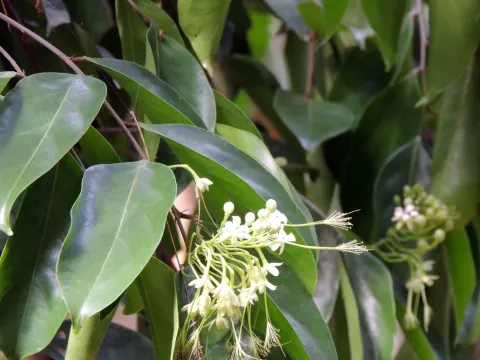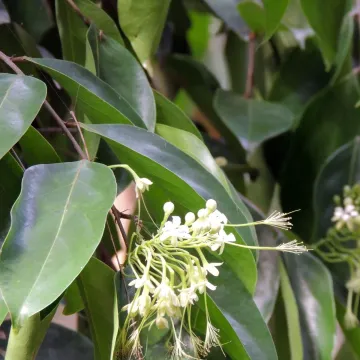
Dactyladenia barteri
Dactyladenia barteri
Description
Dactyladenia barteri is a woody perennial plant belonging to the Chrysobalanaceae family. Recognized for its significant biomass production, it serves as a critical component in agroforestry systems, particularly within the tropical landscapes of West Africa.
The origin of this species is traced to the humid tropical forests of countries like Nigeria and Cameroon. It is well-adapted to high-temperature environments with heavy annual rainfall, thriving in secondary forests and agricultural areas where soil depletion is a major challenge for local farmers.
Botanically, Dactyladenia barteri is a shrub or small tree characterized by vigorous growth and a high leaf-to-wood ratio. Its foliage is rich in nutrients, which allows for rapid decomposition when applied as mulch. The root system is deep and complex, which is essential for stabilizing soil and improving moisture retention in agricultural plots.
Regarding cultivation, the plant requires deep, well-drained soil to reach its full potential. In alley cropping systems, the trees are planted in rows and pruned regularly. This practice not only provides organic matter for the intercropped food crops but also regulates light penetration, ensuring optimal growing conditions for the associated species.
The primary agricultural and economic uses include:
- Serving as a source of green manure to naturally fertilize soils.
- Acting as a biological barrier against soil erosion on sloped land.
- Suppressing weed growth in agricultural alleys through thick mulching.
- Providing sustainable biomass for fuel and local fence construction.
While the plant is highly resilient, it is susceptible to certain tropical fungal pathogens if planted in waterlogged soils. Typical pests include leaf-chewing insects common in tropical ecosystems. Implementing proper pruning cycles and ensuring good site drainage are the most effective strategies to maintain tree health and prevent disease outbreaks.
Photo gallery