Egyptian crowfoot grass
Dactyloctenium aegyptium (L.) Willd.
Description
Egyptian crowfoot grass (Latin Dactyloctenium aegyptium) is an annual grass species belonging to the family Poaceae. It is widely recognized in arid and semi-arid agricultural systems for its resilience and ability to provide nutritious forage under harsh environmental conditions.
Native to Africa, this grass has successfully spread across tropical and subtropical regions worldwide. Its natural distribution is quite broad due to its capability to adapt to diverse soil types, including sandy, loamy, and saline soils, where other forage crops struggle to establish.
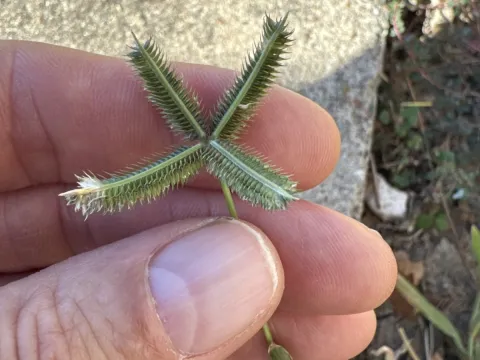
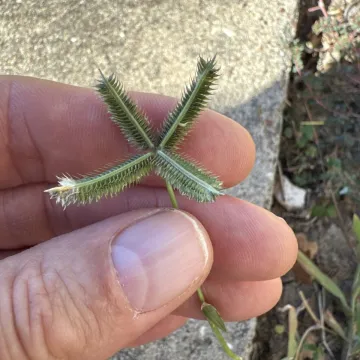
Botanically, the plant is identified by its distinctive finger-like inflorescences, from which it derives its common name. The stems are typically spreading and can root at the nodes, forming dense mats that are highly effective at covering the ground and preventing surface soil erosion.
The agronomic management of this species involves minimal inputs. It thrives in high-temperature environments with full solar exposure. While it is naturally drought-tolerant, supplementary irrigation can significantly boost biomass production, making it a valuable candidate for managed grazing systems in dry climates.
In agricultural practice, Egyptian crowfoot is primarily utilized for livestock grazing and hay production. It is highly palatable in its vegetative stage. However, farmers are advised to harvest it before the seeds fully mature, as the stems become lignified and tougher, which reduces digestibility for livestock.
- Exceptional drought tolerance.
- Rapid biomass accumulation in heat.
- Tolerance to saline soil conditions.
- Soil conservation and erosion control properties.
Photo gallery