Button grass
Dactyloctenium radulans
Description
Button grass (Dactyloctenium radulans) is an annual herbaceous plant belonging to the grass family Poaceae. In agricultural terms, it is recognized as a valuable fodder plant that thrives in arid and semi-arid environments. This species is highly valued for its resilience and ability to provide ground cover where other crops often fail.
Native to Australia, this plant is well-adapted to the harsh conditions of its homeland. Its distribution area spans across various dry zones in Africa and Asia, where it has naturalized. The species is characterized by its rapid life cycle, which allows it to complete its reproductive stage quickly following sporadic rain events.
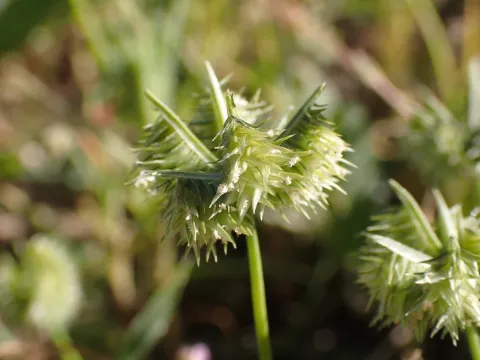
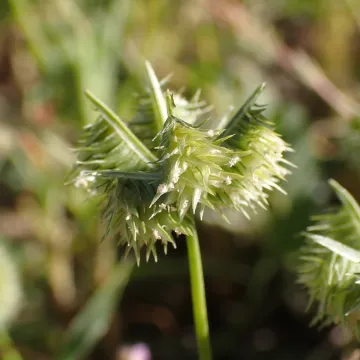
The botanical structure of Dactyloctenium radulans is defined by its distinct digitate inflorescences, resembling small buttons or fingers, which gives the plant its common name. The stems are typically spreading or semi-erect, and the leaves have a characteristic roughness. Its root system is finely branched, providing excellent stability and nutrient uptake efficiency in loose or sandy soils.
Climatic requirements focus on high heat tolerance and adaptability to low rainfall. It performs best in well-drained soils, ranging from sandy loams to heavier clays, provided there is no long-term waterlogging. Cultural management includes strategic grazing to maintain the health of the stand and ensuring that seed production is allowed to replenish the soil seed bank for the following season.
- High drought tolerance
- Nutritious forage for livestock
- Adaptability to varying soil textures
- Efficient water use mechanism
Primary agricultural use is as grazing forage, where it contributes significantly to the nutritional balance of livestock diets in rangelands. Major challenges include susceptibility to localized fungal pathogens during unexpected wet spells and competition from invasive weed species. However, when managed properly, it serves as a reliable pastoral resource in extreme environments.
Photo gallery