Dalechampia scandens
Dalechampia scandens
Description
Dalechampia scandens is a perennial climbing plant belonging to the Euphorbiaceae family. This species is recognized for its twining habit, allowing it to act as a vigorous vine in tropical ecosystems. It serves as an interesting botanical subject due to its unique growth patterns and evolutionary adaptations within the Spurge family.
The native range of this species extends across the tropical regions of the Americas, including Mexico, Central America, the Caribbean, and parts of South America. It thrives in diverse environments, ranging from dense tropical forests to disturbed shrublands, showing a remarkable ability to colonize different niches within its natural habitat.
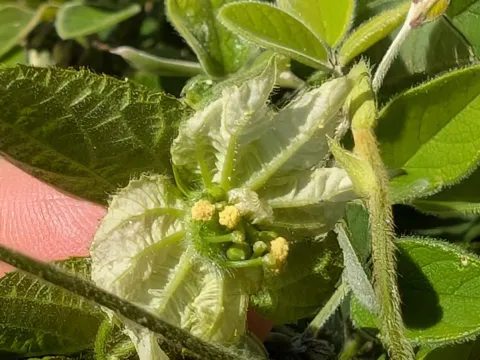
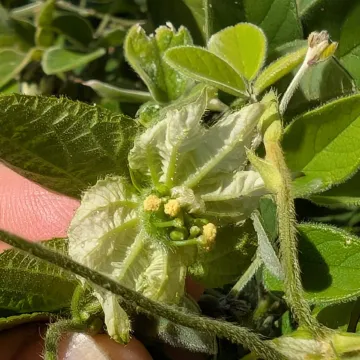
Botanically, the plant is characterized by its pseudanthia — complex inflorescences often mistaken for individual flowers. These structures are accompanied by showy bracts that play a critical role in attracting pollinators. The foliage is typically cordate or lobed, and the stem system is adapted for climbing, utilizing rapid internode elongation to reach sunlight in forest understories.
Agronomic requirements for this culture include high humidity, well-draining soil rich in organic matter, and consistent warm temperatures. Exposure to frost can be fatal, making it strictly suitable for tropical or protected indoor cultivation. Regular pruning is essential for maintaining plant vigor and managing the horizontal and vertical growth of the vines.
While primarily cultivated for ornamental purposes in botanical gardens and private collections, the species is also of scientific interest due to the phytochemical properties of its sap. Typical pests include spider mites and mealybugs, which are common in tropical plant collections.
- Ensure well-drained soil
- Maintain temperatures above 20°C
- Provide structural support for climbing
- Monitor for sap-sucking insects
Photo gallery