Damasonium bourgaei
Damasonium bourgaei
Description
Damasonium bourgaei is a specialized aquatic and wetland plant belonging to the Alismataceae family. As a herbaceous perennial, it is uniquely adapted to thrive in environments characterized by fluctuating water levels, typically found in ephemeral wetlands or shallow marshy zones that undergo periodic drying phases.
The native range of this species extends across the Mediterranean basin and parts of the Middle East. It has evolved to survive in habitats where the water availability is seasonal, making its life cycle highly dependent on the timing and duration of hydrological cycles. This evolutionary background is crucial for understanding its survival mechanisms.
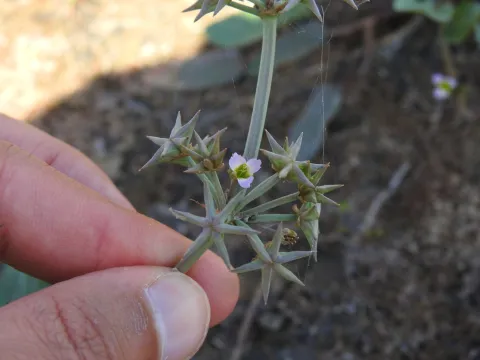
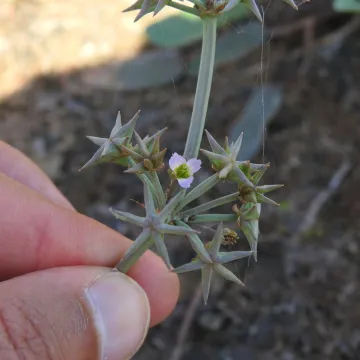
Botanically, the plant features a distinct basal rosette of leaves and slender flowering stems. Its most recognizable feature is the fruit, which consists of several follicles arranged in a star-like structure. The roots are relatively shallow, as the plant relies heavily on nutrient absorption from the substrate and the surrounding water column, reflecting its hydrophytic nature.
Cultivation requirements involve maintaining a precise water regime that mimics its natural habitat. The ideal substrate should be nutrient-dense, consisting of fine sediment or enriched silt. Temperature management is equally critical, with the plant performing best in warm environments between 20°C and 25°C. Excessively stagnant water should be avoided to ensure sufficient oxygenation for the roots.
- Requires nutrient-rich, silty substrates.
- Sensitive to extreme temperature fluctuations.
- Susceptible to fungal pathogens in poorly aerated water.
- Mainly used for specialized aquatic landscaping and habitat restoration.
Regarding health and protection, Damasonium bourgaei is prone to root rot if the water quality deteriorates or if the sediment becomes anaerobic. In terms of pests, it is vulnerable to aquatic invertebrates and mollusks that graze on the delicate foliage. Integrated management involves regular monitoring of water clarity and chemical parameters to prevent disease outbreaks.
Photo gallery