Heath grass
Danthonia decumbens
Description
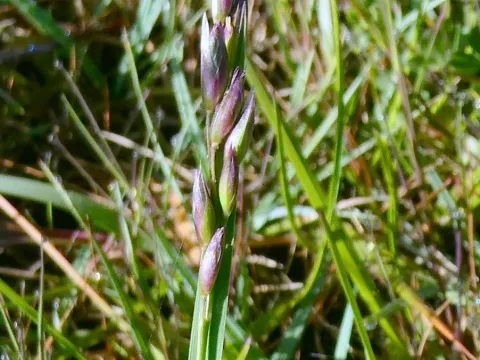
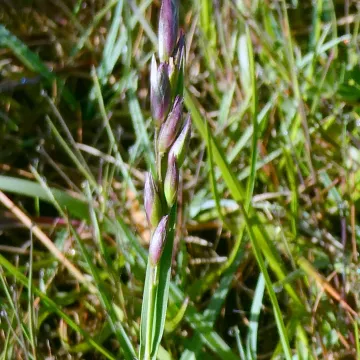
Heath grass (lat. Danthonia decumbens) is a perennial grass species belonging to the Poaceae family. Traditionally classified within the genus Danthonia, it is a hardy, tufted plant frequently found in various natural grasslands. It is highly valued for its ability to persist in environments that are often too challenging for more sensitive agricultural grass varieties.
The plant's natural range is widespread, covering most of Europe, the Caucasus, and parts of Western Asia. It is commonly found in acid soils, heathlands, nutrient-poor meadows, and clearings within woodland areas. Its adaptability to low-fertility soils makes it a significant species in marginal land management and ecological restoration projects.
Botanically, Heath grass is characterized by narrow, sometimes inrolled leaves and the presence of cleistogamous spikelets—flowers that self-pollinate within the leaf sheaths. These spikelets are a unique adaptation that ensures seed production even in less favorable weather conditions. The stems generally reach a height of 20 to 50 centimeters, supported by a dense, fibrous root system.
In terms of cultivation and agronomy, Heath grass is relatively low-maintenance. It thrives in temperate, moist climates and prefers acidic, lime-deficient soils. It is notably sensitive to high nitrogen inputs, which can lead to it being outcompeted by more aggressive, nitrophilous species. Therefore, success in managing this crop depends on maintaining low-input, extensive agricultural practices.
Its primary agricultural use is as a component of permanent pastures on marginal soils. While its biomass production is moderate, its persistence is high. Challenges faced during cultivation include:
- Susceptibility to rust fungal infections during prolonged humid periods.
- Potential vulnerability to soil-dwelling larvae that feed on roots.
- The need for controlled grazing to maintain the health and density of the sward.
Photo gallery