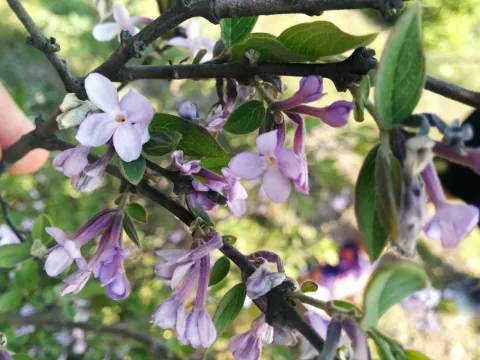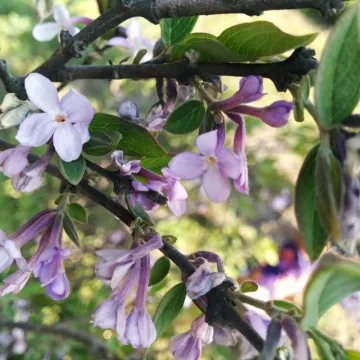
Daphne genkwa
Daphne genkwa
Description
Daphne genkwa, commonly known as the lilac daphne, is a deciduous shrub belonging to the Thymelaeaceae family. It is widely celebrated in horticulture for its spectacular display of lilac-blue flowers that emerge on bare branches in early spring, signaling the arrival of the new growing season.
Native to East Asia, specifically China, Korea, and Japan, this plant has adapted to diverse environments ranging from mountain slopes to forest edges. Its natural habitat suggests a plant that is resilient and well-suited for rock gardens, provided that the soil conditions mimic its native environment.
Botanically, the shrub typically grows to a height of 30–100 cm. Its growth habit is slender and branching, with thin, lanceolate leaves that appear after the flowering phase. The root system is relatively shallow, which makes it important to avoid deep cultivation near the base of the plant to prevent structural damage.
Agronomic success with Daphne genkwa relies on precise moisture management and soil quality. It thrives in well-draining, humus-rich, and slightly acidic to neutral soils. It is essential to ensure that the site does not become waterlogged, as the roots are highly susceptible to rot, especially during dormant periods or periods of high rainfall.
Regarding its utility, the plant serves both aesthetic and scientific purposes. In landscaping, it is a prized specimen for temperate gardens and rockeries. Medicinally, specific parts of the plant are investigated for chemical compounds in traditional practices, but gardeners must exercise extreme caution as the entire plant is considered toxic if ingested.
- Spectacular early spring flowering.
- Requires excellent drainage for survival.
- Compact size suitable for small gardens.
- Low maintenance once established.
- Caution: Contains toxic compounds throughout.
Photo gallery