Daphne gnidium
Daphne gnidium
Description
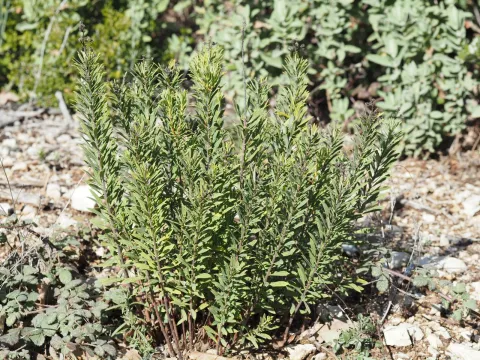
Daphne gnidium, commonly known as the flax-leaved daphne, is an evergreen shrub belonging to the Thymelaeaceae family. It is a highly resilient plant that has evolved to thrive in the challenging environmental conditions of the Mediterranean basin, showcasing remarkable drought tolerance and adaptability to nutrient-poor substrates.
Originating from the Mediterranean region, this species is naturally found in coastal areas, scrublands, and limestone hills. Its ability to withstand high temperatures and saline winds makes it an ideal candidate for coastal landscaping and xeriscaping projects across similar temperate climate zones.
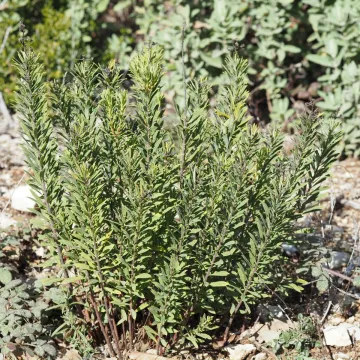
The plant features slender, lanceolate leaves and produces dense clusters of small, fragrant white flowers during the summer months. As the season progresses, it yields clusters of small, bright red berries. These botanical features, combined with its neat, compact growth habit, make it highly appreciated by garden designers and horticultural enthusiasts.
Agricultural requirements for Daphne gnidium focus on excellent soil aeration. It strictly requires well-drained, alkaline, or neutral soil. Overwatering is the most common cause of failure in cultivation, as excessive moisture leads to root rot. Providing sufficient sunlight is essential to stimulate flowering and maintain the plant’s dense canopy structure.
While relatively low-maintenance, the plant requires attention to common pests like aphids, which frequently infest young shoots. Gardeners should also monitor for fungal pathogens that may occur in conditions with poor air circulation. Given its toxicity, it is crucial to handle the plant with care, ensuring that it is kept away from areas frequented by small children or pets.
Photo gallery