Daphne papyracea
Daphne papyracea
Description
Daphne papyracea is a distinctive evergreen shrub belonging to the Thymelaeaceae family. Known primarily for its resilience and unique fiber properties, this species holds significant cultural and economic value in its native regions, particularly in the production of traditional handmade papers that are renowned for their strength and durability.
The plant is native to the Himalayan region, specifically inhabiting the mountain forests of Nepal, Bhutan, Northern India, and parts of China. Thriving at altitudes between 1,500 and 3,000 meters, it has adapted to temperate, moisture-rich environments. Its natural habitat is characterized by cool temperatures and high humidity, often shielded by a canopy of taller forest trees.
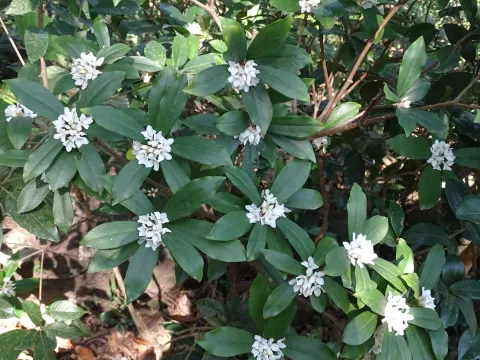
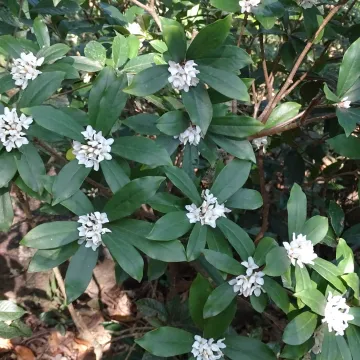
Botanically, it features leathery, dark green leaves and clusters of fragrant, tubular flowers that bloom in late winter or early spring. The stems are characterized by a flexible, fibrous bark, which serves as the primary raw material for industrial applications. The growth habit is generally slow, emphasizing the development of a robust root system before significant vegetative expansion.
Agronomic requirements for this culture include partial shade and well-draining, humus-rich soil with a neutral to slightly acidic pH level. Overwatering is a critical risk factor, as it can lead to root rot; therefore, planting on slopes or in raised beds is often recommended. In controlled environments, providing consistent moisture during the growing season is essential for optimal fiber quality.
Beyond its use as a fiber crop, it is highly regarded as an ornamental specimen in temperate gardens. It is relatively resistant to common pests, though aphids or fungal infections may occur in stagnant, overly humid conditions. Growers must handle the plant with care, as its sap can cause irritation to human skin and is toxic if ingested by pets or livestock.
- Consistent moisture in a well-draining substrate
- Protection from intense midday sunlight
- Regular monitoring for fungal pathogens
- Minimal pruning to maintain structural integrity
Photo gallery