Daphne pseudomezereum
Daphne pseudomezereum
Description
Daphne pseudomezereum is a distinctive deciduous shrub belonging to the Thymelaeaceae family. Often recognized for its taxonomic proximity to the common mezereon, this species is highly valued in horticulture for its early spring flowering period and unique structural form, making it a prized specimen for temperate zone woodland gardens.
Native to the mountain forests of East Asia, primarily in Japan, this shrub has adapted to life in the understory. Its natural habitat is characterized by cool, moist conditions with high organic matter content in the soil, which should be replicated as closely as possible in a garden setting to ensure the plant's long-term health and vitality.
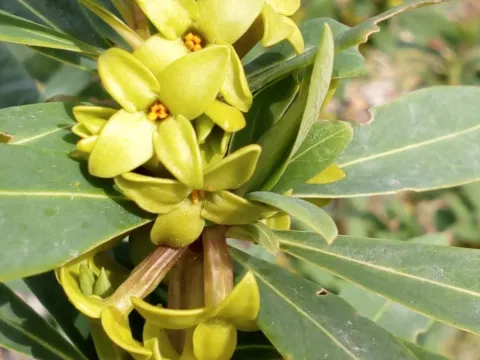
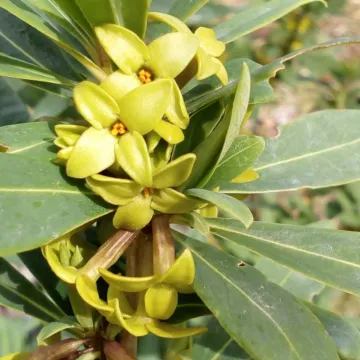
Botanically, the plant features slender branches and alternate leaves. The flowers are the primary ornamental feature, emerging in clusters before the leaves unfold. These blooms are not only visually striking but also aromatic. As with other members of the Daphne genus, all parts of the plant are toxic, necessitating caution regarding its placement in gardens frequented by children or pets.
Cultivation success depends on providing optimal site conditions. The plant demands a semi-shaded location, protected from scorching midday sun and harsh winds. The soil must be well-drained, slightly acidic to neutral, and enriched with compost or leaf mold. It thrives in locations where the root zone can remain cool and consistently moist without becoming waterlogged.
Maintenance is relatively minimal but requires consistency. Pruning should be restricted to the removal of dead or crossing branches, as the plant does not respond well to heavy trimming. Given its susceptibility to root rot, ensure that the soil drainage is excellent. While the plant is generally resistant to pests due to its chemical profile, maintaining airflow around the foliage helps prevent fungal infections.
Photo gallery