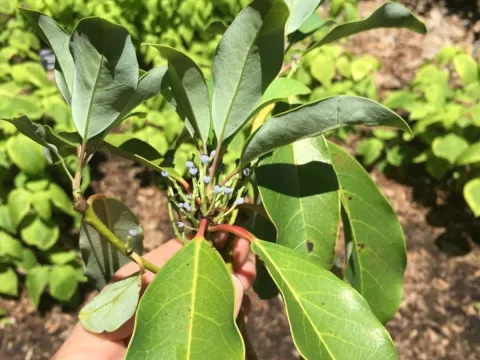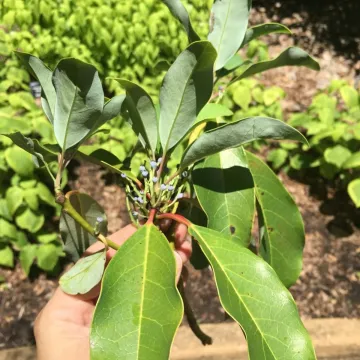

Daphniphyllum humile
Daphniphyllum humile
Description
Daphniphyllum humile is a slow-growing, broad-leaved evergreen shrub belonging to the Daphniphyllaceae family. Known for its low, spreading habit and resilient nature, this plant is particularly valued in temperate climate landscapes for its ability to maintain lush, dark green foliage throughout the winter months, even in cooler regions.
The plant originates from the northern parts of Japan, specifically Hokkaido and Honshu. In its native habitat, it grows in the understory of dense forests, thriving in moist environments protected by deep snow cover during the winter. This evolutionary background makes it an excellent choice for shaded garden locations with high humidity.
Botanically, Daphniphyllum humile features leathery, elliptical leaves that grow in terminal clusters. It is dioecious, meaning individual plants have either male or female flowers. The flowers themselves are relatively inconspicuous, followed by small, drupe-like fruits that add a subtle textural contrast to the foliage once they mature in late summer.
Cultivation requirements focus on providing acidic, well-draining, and humus-rich soil. While the plant is quite hardy, it requires consistent moisture and protection from harsh, drying winds or direct midday sun. Incorporating organic mulch around the base of the shrub helps regulate soil temperature and moisture levels, mimicking its forest-floor origin.
The primary use of this species is ornamental landscaping, where it is utilized for mass planting or as a low-profile evergreen ground cover. Common issues that growers may face include:
- Infection by leaf spot fungi during damp, stagnant seasons.
- Infestation by scale insects which can cluster on the stems.
- Nutrient deficiencies if the soil pH becomes too alkaline, causing foliage yellowing.
Photo gallery