Darmera peltata
Darmera peltata
Description
Darmera peltata, commonly known as Indian rhubarb or umbrella plant, is a distinct perennial herb belonging to the Saxifragaceae family. The plant is renowned for its large, peltate foliage and its unique, early-season bloom habit, which makes it a standout feature in suitable garden environments.
Originating from the mountainous regions of Northern California and Southern Oregon in the United States, Darmera peltata is naturally adapted to cool, moist environments. In the wild, it typically thrives along the banks of woodland streams and seeps, indicating its primary environmental requirements for successful cultivation in gardens.
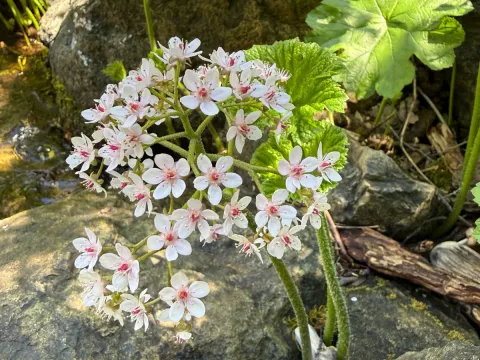
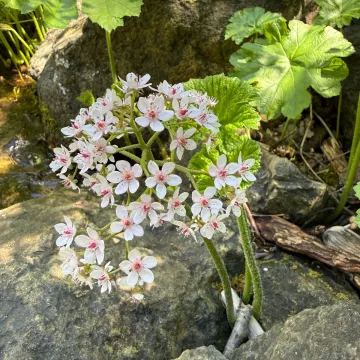
Botanically, the plant produces dense, spherical clusters of small, pale pink to white flowers on thick, leafless stalks before the foliage emerges in the spring. Following the flowering phase, large, circular, umbrella-shaped leaves develop on stout petioles, reaching heights of up to one meter, providing an architectural presence in the landscape.
To cultivate Darmera effectively, gardeners must provide deep, moisture-retentive, organic-rich soil and a sheltered, semi-shaded location. Unlike many ornamental perennials, this species requires consistent irrigation and is strictly intolerant of extended periods of drought, which can lead to premature leaf scorching and stunted growth.
- Requires consistently moist soil conditions.
- Thrives in partial to full shade environments.
- Minimal pruning required, primarily removing dead leaves in late autumn.
- Vulnerable to slug and snail damage during the early growing season.
The primary horticultural application for this species is in water-side plantings, rain gardens, and moist woodland borders. While generally robust, it should be monitored for fungal issues in poor drainage sites and managed by controlling gastropod populations during the spring growth phase to ensure optimal leaf development.
Photo gallery