Hairy canary grass
Dasypyrum villosum
Description
Hairy canary grass (Dasypyrum villosum) is an annual or biennial grass belonging to the Poaceae family. This species is highly valued in modern agronomy and plant breeding as a primary genetic resource for the improvement of wheat and rye, offering significant potential for transferring traits like drought and salt tolerance into mainstream commercial cultivars.
The plant originates from the Mediterranean basin and is widely distributed across Southern Europe, the Caucasus, and the Middle East. It is a highly adaptive species, naturally thriving in dry, rocky soils, roadsides, and disturbed habitats, which underscores its extreme resilience to adverse environmental conditions.
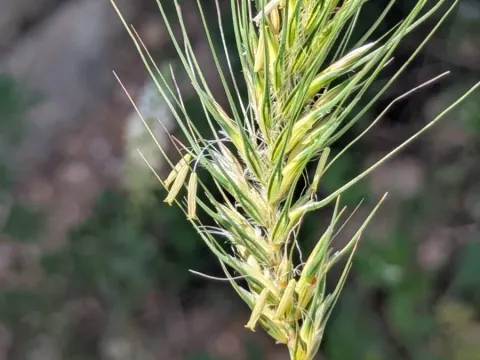
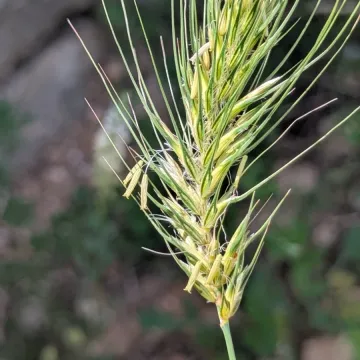
Botanically, the plant is characterized by erect stems that grow up to 100 cm in height and distinct spike-like inflorescences densely covered in fine hairs, which gives the plant its common and scientific names. The leaves are typically narrow and linear, possessing a bluish-green hue, an adaptation that helps in maintaining water balance during prolonged heatwaves.
Cultivation requirements for hairy canary grass are relatively low compared to traditional cereal crops. It thrives in well-drained, sunny environments with alkaline to neutral soil pH. The species demonstrates remarkable tolerance to low moisture levels and salinity, making it an excellent candidate for agricultural production in semi-arid and marginal land areas where other crops fail.
The primary directions for the economic use of Dasypyrum villosum include:
- Genetic source for wheat breeding programs.
- Forage and grazing grass for arid pastoral regions.
- Soil conservation and erosion control on poor landscapes.
- Sustainable cover cropping to improve soil structure.
While the species is naturally robust, it can be susceptible to common grass diseases like rust and powdery mildew under high-humidity conditions. Insect pests such as aphids and cereal flies can also pose a threat if the crop is cultivated in large-scale fields, requiring standard integrated pest management strategies to ensure optimal yields and genetic purity.
Photo gallery